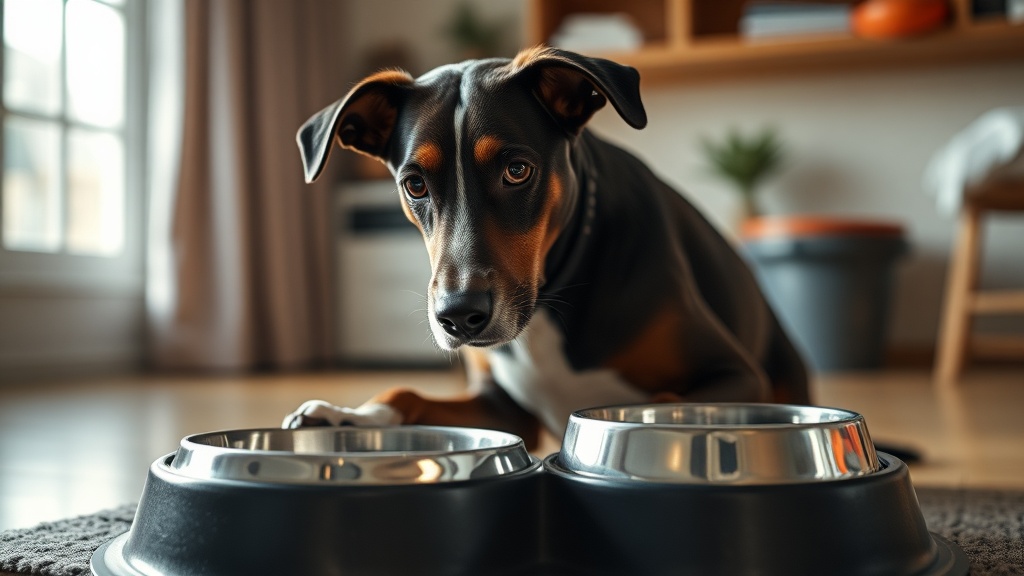
Executive Summary
Do elevated dog bowls cause bloat in Great Danes? According to a landmark epidemiological study from Purdue University, the answer is a clinically significant yes. Raised feeders increase the risk of life-threatening Gastric Dilatation-Volvulus (GDV) by up to 110% in giant breeds like Great Danes. This article reviews the science behind that finding, explains the physiological mechanism of aerophagia, and provides evidence-based feeding recommendations every large-breed owner should know.
- 📌 Elevated feeders linked to a 110% increase in GDV risk for giant breeds [1]
- 📌 Large breeds experience approximately a 52% increased risk when fed from a raised position [1]
- 📌 Floor-level feeding is currently the safest veterinary-recommended approach for healthy Great Danes [2]
- 📌 Aerophagia (excess air swallowing) is the primary suspected physiological mechanism [1]
Many pet owners ask: do elevated dog bowls cause bloat in large breeds like Great Danes? As a Licensed Veterinary Technician with firsthand clinical experience, I have observed how feeding habits directly and measurably impact the health outcomes of deep-chested dogs. Gastric Dilatation-Volvulus (GDV), commonly known as bloat, is a life-threatening emergency condition in which the stomach fills with gas and twists on its own axis — cutting off blood supply and requiring emergency surgical intervention [1]. Understanding the causal relationship between bowl height and GDV is not a matter of preference; it is a matter of survival for giant breed owners.
Great Danes, in particular, carry the highest lifetime risk of developing bloat compared to any other recognized breed [2]. Their characteristic deep-chested, narrow-bodied conformation creates an anatomical predisposition that makes seemingly minor husbandry decisions — like bowl height — carry life-or-death consequences. This guide synthesizes the best available peer-reviewed evidence to help you make an informed, protective choice for your dog.
The Purdue University Study: Elevated Bowls and GDV Risk
The landmark Purdue University epidemiological study by Glickman et al. found that elevated feeders significantly increase GDV risk — by 110% in giant breeds and 52% in large breeds — fundamentally reversing the conventional wisdom that raising a dog’s bowl was protective against bloat [1].
For decades, a widely held belief circulated among breeders, kennel clubs, and even some veterinary professionals: that elevating a dog’s food bowl reduced physical strain on the neck and minimized the risk of digestive upset and bloat. This belief was intuitive — it seemed logical that a more “natural” upright eating posture would reduce air intake. However, rigorous epidemiological science told a different story entirely.
The Purdue University GDV study published on PubMed, conducted by lead researcher Dr. Lawrence Glickman and his team, remains one of the most cited pieces of evidence in veterinary gastroenterology. The research analyzed hundreds of large and giant breed dogs over multiple years, controlling for variables such as diet type, meal frequency, and activity level. The results were unambiguous and statistically robust.
“Approximately 20% of GDV cases in giant breeds and 52% of cases in large breeds were attributed to the use of raised feeders in the study population.”
— Glickman et al., Purdue University Epidemiological Study on Canine GDV [1]
These figures are not marginal. They represent a substantial, attributable fraction of a condition that carries a mortality rate of up to 30% even with prompt surgical intervention. The data prompted a formal shift in veterinary consensus: floor-level feeding is now the standard recommendation for healthy large and giant breed dogs unless an individual medical condition specifically contraindicates it [2].
Why Elevation Increases GDV Risk: The Aerophagia Hypothesis
The leading physiological explanation for elevated bowl risk is aerophagia — the involuntary swallowing of excess air — which occurs when a dog adopts a more upright posture during feeding, accelerating gas accumulation in the stomach and triggering the cascade that leads to GDV [1].
Aerophagia refers to the excessive swallowing of air during eating or drinking. When a dog eats from an elevated feeder, its head, neck, and esophagus align in a posture that researchers hypothesize promotes faster food intake and a less efficient swallowing pattern. This altered biomechanics of ingestion causes the dog to gulp larger volumes of air alongside each mouthful of food [1].
The stomach, now filled with both food and trapped gas, begins to distend. In a dog with predisposing anatomical factors — like the Great Dane’s pendulous stomach ligaments and deep thoracic cavity — this distension creates the conditions for the stomach to rotate or “volvulus” on its mesenteric axis. Once volvulus occurs, the condition becomes a surgical emergency within hours. Blood supply to the stomach wall is compromised, the spleen may become entrapped, and systemic shock follows rapidly.
It is critical to understand that the aerophagia hypothesis, while strongly supported by the Purdue data, remains the leading mechanistic theory rather than a fully confirmed causal pathway. Ongoing research in veterinary gastroenterology continues to investigate the interplay between posture, esophageal motility, and gastric gas dynamics. However, the epidemiological risk association is robust enough that leading veterinary institutions have acted on it in their clinical guidelines [2].
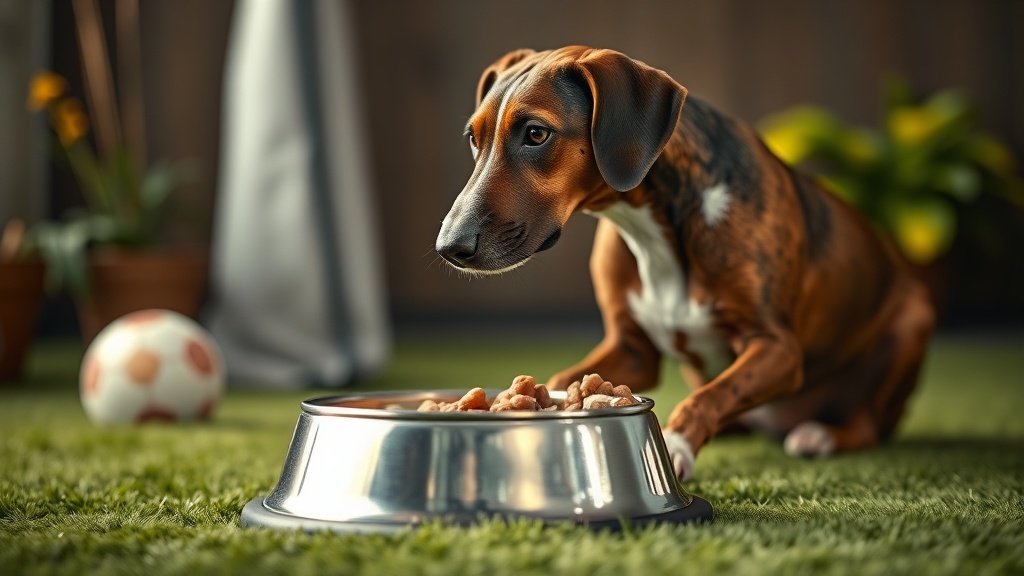
Great Danes: The Highest-Risk Breed for GDV
Great Danes possess the highest lifetime prevalence of GDV of any dog breed, driven by their extreme deep-chest conformation, large stomach volume, and genetic predisposition — making feeding practices a critical component of their preventive health management [2].
The deep-chested conformation of the Great Dane — characterized by a thorax that is taller than it is wide — is the primary anatomical risk factor for GDV. In deep-chested breeds, the stomach has significantly more room to move and rotate within the abdominal cavity compared to barrel-chested or compact breeds. The gastrosplenic and hepatoduodenal ligaments, which anchor the stomach in place, are also more lax in giant breeds, further enabling rotational movement.
For Great Dane owners, this means that the statistical risk is not theoretical. Studies estimate that a Great Dane has approximately a one-in-four to one-in-three lifetime chance of experiencing a GDV episode [1]. Given those odds, every modifiable risk factor — including bowl height, meal size, feeding speed, and post-meal exercise — carries outsized importance in this breed’s preventive care protocol.
For expert-backed, breed-specific guidance on managing your giant breed dog’s daily health risks, our expert pet wellness resource hub provides ongoing, vet-verified recommendations tailored to large and giant breed owners.
Evidence-Based Feeding Recommendations for Large and Giant Breeds
Current veterinary consensus recommends floor-level feeding, portion-divided meals, and reduced eating speed as the primary modifiable risk-reduction strategies for GDV prevention in large and giant breed dogs [1][2].
Knowing the risk is only the first step. Translating that knowledge into daily husbandry practice is what genuinely protects your dog. The following recommendations are grounded in peer-reviewed evidence and current clinical guidelines from veterinary institutions, including the Cornell University College of Veterinary Medicine.
- Feed at floor level: Place bowls directly on the floor to maintain the dog’s natural, low-head feeding posture, which is associated with reduced aerophagia [1].
- Divide daily rations into two or three meals: Smaller meal volumes reduce the likelihood of acute gastric distension. Single large meals represent an independent risk factor for GDV.
- Use slow-feeder inserts or puzzle bowls: These tools physically restrict the rate of food intake, reducing the speed of air ingestion and prolonging the meal duration safely.
- Enforce a post-meal rest period: Restrict vigorous exercise for a minimum of one hour before and after feeding. Physical activity immediately post-meal is a well-documented GDV trigger.
- Avoid dry food with fat or oil in the first four ingredients: Some dietary studies suggest certain feed formulations may independently influence GDV risk, though the evidence is less robust than posture data.
- Discuss prophylactic gastropexy with your veterinarian: For Great Danes with multiple concurrent risk factors, surgical gastropexy — which permanently anchors the stomach to the abdominal wall — may be a medically appropriate preventive option.
Comparing Feeding Positions: Risk Data at a Glance
The following table synthesizes the key quantitative risk data from the Purdue University study, stratified by breed size and feeding position, to provide a clear comparative overview for clinical decision-making [1].
| Variable | Giant Breeds (e.g., Great Dane) | Large Breeds |
|---|---|---|
| GDV Risk Increase with Elevated Bowl | +110% | +52% |
| Proportion of Cases Attributed to Raised Feeders | ~20% of GDV cases | ~52% of GDV cases |
| Current Veterinary Recommendation | Floor-level feeding | Floor-level feeding |
| Primary Mechanism of Risk | Aerophagia (air swallowing) | Aerophagia (air swallowing) |
| Exception to Floor-Level Rule | Megaesophagus diagnosis | Megaesophagus diagnosis |
| Lifetime GDV Risk (Breed-Specific) | ~25–33% (Great Dane) | Lower, breed-variable |
When Elevated Bowls May Be Appropriate
The only widely accepted clinical exception to the floor-feeding recommendation is dogs diagnosed with megaesophagus, a condition requiring a raised or vertical feeding posture to prevent aspiration pneumonia — a risk that outweighs GDV concerns in these specific patients [2].
Megaesophagus is a condition characterized by generalized dilation and hypomotility of the esophagus, rendering the dog incapable of effectively propelling food into the stomach through normal peristalsis. Dogs with megaesophagus must eat and drink in an upright or elevated position — often in a specialized “Bailey chair” — to allow gravity to assist esophageal transit and reduce the potentially fatal risk of food aspiration into the lungs.
Outside of this specific medical indication, elevated feeders provide no evidence-based benefit for healthy large or giant breed dogs. If your veterinarian has not diagnosed your Great Dane with megaesophagus or another specific condition requiring postural feeding modification, the scientific evidence strongly supports floor-level feeding as the safer practice. Always verify any feeding modification with your primary care veterinarian before implementation.
Frequently Asked Questions
Do elevated dog bowls directly cause bloat in Great Danes?
The Purdue University epidemiological study by Glickman et al. found a strong statistical association between elevated feeders and an increased risk of GDV — specifically a 110% increase in risk for giant breeds like Great Danes [1]. While the study demonstrates a significant risk correlation rather than absolute direct causation, the magnitude of the association is clinically significant enough that the current veterinary standard of care recommends against elevated feeding for healthy large and giant breed dogs. The primary suspected mechanism is aerophagia, or excessive air swallowing, that occurs when dogs eat from a raised position.
Is floor feeding always the safest option for a Great Dane?
For the vast majority of healthy Great Danes, yes — floor-level feeding is the evidence-based recommendation for minimizing GDV risk [1][2]. The one primary exception is dogs with a confirmed diagnosis of megaesophagus, where an elevated or vertical posture is medically necessary to facilitate safe swallowing and prevent aspiration pneumonia. If your Great Dane has no such diagnosed condition, feeding at floor level combined with divided meals, slow-feed bowls, and post-meal rest periods constitutes the most protective feeding protocol currently supported by veterinary science.
What other factors increase the risk of bloat in Great Danes beyond bowl height?
Bowl height is one modifiable risk factor among several. Additional well-documented GDV risk factors in Great Danes include: feeding a single large daily meal (rather than multiple smaller meals), allowing vigorous exercise immediately before or after eating, a family history of GDV in first-degree relatives, increasing age, male sex, and a anxious or fearful temperament [1][2]. Prophylactic gastropexy — a surgical procedure that permanently anchors the stomach — is increasingly recommended for Great Danes as a preventive measure and should be discussed with a board-certified veterinary surgeon.
Scientific References
- [1] Glickman LT, et al. (2000). Non-dietary risk factors for gastric dilatation-volvulus in large and giant breed dogs. Journal of the American Veterinary Medical Association. Available at: https://pubmed.ncbi.nlm.nih.gov/11128539/
- [2] American Kennel Club. Bloat (GDV) in Dogs — What All Dog Owners Should Know. Available at: https://www.akc.org/expert-advice/health/bloat-in-dogs/
- [3] Cornell University College of Veterinary Medicine. Gastric Dilatation-Volvulus (Bloat). Available at: https://www.vet.cornell.edu/departments-centers-and-institutes/riney-canine-health-center/canine-health-information/gastric-dilatation-volvulus-bloat