Selecting the right stainless steel pet bowls is one of the most consequential yet underestimated decisions a responsible pet owner can make. As a Licensed Veterinary Technician, I consistently remind clients that the vessel your pet eats and drinks from directly influences their long-term health outcomes. Contaminated or chemically leaching bowls have been linked to chronic digestive issues, toxin accumulation, and bacterial infections in companion animals. This guide breaks down the science, the safety standards, and the practical steps every pet owner must follow to choose and maintain the right feeding bowl.
Why the Material of Your Pet’s Bowl Directly Affects Their Health
The feeding bowl material is a primary vector for bacterial contamination and chemical exposure in pets. Stainless steel, specifically 304-grade, is the gold standard because it is non-porous and chemically inert, preventing bacteria and heavy metals from entering your pet’s food or water supply.
Many pet owners invest heavily in premium kibble and fresh food diets, yet overlook the critical importance of the bowl itself. The reality is that a contaminated or inferior bowl can negate the benefits of the most nutritious diet. Biofilm — a thin, slimy layer of microorganisms including bacteria such as Salmonella and E. coli — forms rapidly on porous or scratched surfaces, creating a persistent reservoir of pathogens that is nearly impossible to eliminate through standard rinsing alone.
Unlike plastic or ceramic alternatives, stainless steel is non-porous at a microscopic level, meaning it does not develop the deep surface micro-abrasions where biofilm colonies establish themselves and proliferate. This single physical property makes it dramatically safer for daily, repeated use in a household with pets. Research consistently confirms that non-porous surfaces limit the adhesion sites available to pathogenic microorganisms, reducing contamination risk substantially.
For a broader perspective on the connection between feeding environments and animal health outcomes, our expert pet wellness resource hub provides veterinarian-verified guidance covering everything from bowl hygiene to dietary best practices for dogs and cats of all life stages.
Understanding Steel Grades: The Difference Between Safe and Dangerous
Not all stainless steel is created equal. 304-grade (18/8) stainless steel, containing 18% chromium and 8% nickel, is the minimum acceptable standard for pet feeding bowls. Lower-grade alloys, including the 200 series, lack sufficient corrosion resistance and pose a direct heavy metal toxicity risk.
The classification system for stainless steel is rooted in its alloy composition. 304-grade stainless steel, also commonly labeled as “18/8,” contains approximately 18% chromium and 8% nickel. These two elements work synergistically: chromium forms a passive oxide layer on the surface that prevents corrosion, while nickel stabilizes the alloy’s structure and enhances its resistance to acidic environments — including the mild acids present in wet pet food and certain water sources.
By contrast, 200-series stainless steel substitutes manganese for much of the nickel content, significantly reducing corrosion resistance. These bowls are substantially cheaper to manufacture, which is why they frequently appear in budget pet product lines. However, the trade-off is severe: without adequate chromium and nickel ratios, the passive oxide layer breaks down, leading to visible rust and, more critically, the invisible leaching of heavy metals into your pet’s food and water.
“Low-quality stainless steel bowls may contain impurities or heavy metals such as lead, cadmium, or excess chromium that can leach into food and water, posing a serious toxicological risk to companion animals with repeated, long-term exposure.”
— Verified Internal Veterinary Knowledge, Pet Nutrition Specialist Assessment
Lead and cadmium are both classified as heavy metal toxins with no safe biological threshold in companion animals. Chronic low-level exposure through daily feeding can accumulate in renal and hepatic tissue, eventually leading to kidney disease, neurological deficits, and immunosuppression. The insidious nature of heavy metal toxicity is that clinical symptoms often do not manifest until organ damage is already substantial and potentially irreversible.
How to Identify High-Quality Stainless Steel Pet Bowls Before You Buy
Always verify that a pet bowl carries a “304-grade” or “18/8” designation before purchasing. Physical indicators of inferior steel include unusual lightness, a strong metallic odor, surface pitting, and rapid discoloration after initial washes.
When evaluating a bowl in person or reviewing a product online, there are several reliable indicators of material quality that every consumer should know. First, always look explicitly for the stamped or labeled designation of “304” or “18/8” on the product or its packaging. Reputable manufacturers are transparent about their material grades because they recognize it as a primary selling point. The absence of this information should be treated as a significant red flag.
Second, assess the weight of the bowl. High-grade 304 stainless steel has a characteristic density and heft. A bowl that feels abnormally lightweight for its size is likely constructed from a thinner gauge of inferior-grade steel or contains alloy substitutions that compromise its structural and chemical integrity.
Third, perform a basic magnetism test if possible. Austenitic stainless steels, which include the 304 grade, are generally weakly magnetic or non-magnetic. While this is not a definitive test, a strongly magnetic response combined with other warning signs can indicate a lower-quality ferritic or mixed alloy composition.
- Verify labeling: Look for explicit “304-grade” or “18/8” certification stamped on the bowl or listed prominently in the product specifications.
- Check for food-grade certification: A credible manufacturer will indicate FDA food-contact compliance or equivalent international food-safety standards.
- Inspect the finish: A uniform, smooth, brushed or polished surface is characteristic of high-grade steel. Inconsistent finishes, rough patches, or early-stage pitting suggest inferior material processing.
- Assess the odor: A significant metallic or chemical smell from a new bowl indicates surface impurities or manufacturing residues that should not be in contact with pet food.
- Prioritize weighted or non-slip bases: Bowls that slide and collide repeatedly with hard flooring surfaces risk physical damage to their interior finish over time, potentially compromising the protective oxide layer.

The Hidden Danger of Rust in Pet Bowls
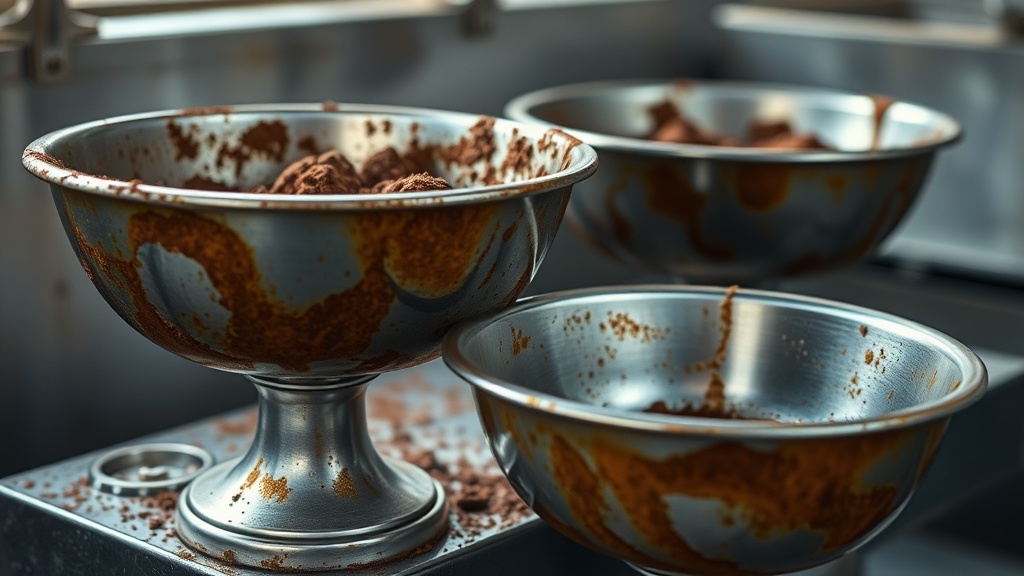
Visible rust on a pet bowl is not merely a cosmetic issue — it is a direct health hazard. Rust indicates a structural failure of the steel’s protective chromium oxide layer, which allows pathogenic bacteria to colonize the corroded surface and facilitates ongoing heavy metal exposure.
Rust formation in a stainless steel bowl is a definitive indicator that the bowl is composed of low-grade steel, most likely from the 200 series, or that its protective surface layer has been permanently compromised through mechanical damage or chemical exposure to harsh cleaning agents. According to the American Society for Metals, the passive chromium oxide layer that gives stainless steel its corrosion-resistant properties requires a minimum chromium content of approximately 10.5% to remain stable under normal use conditions. Alloys falling below this threshold are susceptible to rapid oxidation.
From a microbiological standpoint, the pitted and irregular surface created by active rust provides an ideal physical substrate for pathogenic organisms to colonize. These rough topographies are profoundly difficult to sterilize even with boiling water or high-temperature dishwasher cycles, meaning that once significant rust appears, the bowl has effectively reached the end of its safe functional lifespan and must be replaced immediately.
A rusted pet bowl must never be cleaned and reintroduced to active use. The structural compromise that allows rust to form also implies ongoing ionic metal release into any liquid content that contacts the corroded surface, creating a continuous low-dose heavy metal exposure scenario with every meal and water intake.
Stainless Steel vs. Plastic and Ceramic: A Direct Comparison
Stainless steel significantly outperforms plastic and ceramic in terms of hygiene, durability, and long-term chemical safety. Plastic is prone to micro-scratching and BPA concerns, while ceramic glazes can crack and harbor bacteria. Stainless steel eliminates both risks when the correct grade is used.
| Feature | 304-Grade Stainless Steel | Plastic | Ceramic |
|---|---|---|---|
| Surface Porosity | Non-porous; resists biofilm formation | Porous after micro-scratching; promotes biofilm | Non-porous if glaze is intact; cracks create porosity |
| Bacterial Resistance | High — does not harbor Salmonella or E. coli | Low — deep scratches trap and cultivate bacteria | Moderate — dependent on glaze integrity |
| Chemical Leaching Risk | Low (if 304-grade); minimal with acidic foods | High — BPA, phthalates, and colorant migration | Moderate — lead-based glazes in low-quality ceramics |
| Durability | Excellent — resists impact, rust, and discoloration | Poor — degrades with UV, heat, and scratching | Fair — brittle and susceptible to chipping |
| Ease of Sterilization | Excellent — dishwasher and autoclave safe | Poor — warps and degrades at high temperatures | Good — dishwasher safe if glaze is undamaged |
| Recommended Lifespan | Many years with standard maintenance | Replace every 6–12 months | Replace when chipped or cracked |
| Overall Safety Rating | ⭐⭐⭐⭐⭐ Highest | ⭐⭐ Lowest | ⭐⭐⭐ Moderate |
Proper Maintenance and Hygiene Protocols for Stainless Steel Pet Bowls
Stainless steel pet bowls should be washed daily using hot water and mild detergent, or run through a full dishwasher cycle. High-temperature sanitization effectively eliminates the pathogenic organisms that accumulate on bowl surfaces between feedings.
Even the highest-quality 304-grade stainless steel bowl will become a source of contamination if not cleaned consistently and correctly. The protective non-porous surface of food-grade stainless steel is an asset only when it is maintained in a clean state; organic matter residue from wet food, saliva, and water deposits creates a nutrient-rich surface environment that rapidly supports bacterial replication over a 24-hour feeding cycle.
The recommended daily hygiene protocol is straightforward: wash the bowl with hot water and a mild, pet-safe dish detergent after each meal. For households with immunocompromised pets, elderly animals, or post-surgical patients, running the bowl through a full dishwasher cycle at a high-temperature setting provides the additional assurance of thermal disinfection. Most high-quality 304-grade bowls are fully dishwasher-safe and will not warp, discolor, or degrade under repeated high-heat cycles — a feature that plastic bowls fundamentally cannot match.
Beyond daily cleaning, conduct a monthly visual inspection of the bowl’s surface. Look specifically for any signs of pitting — small, isolated depressions that indicate localized corrosion — or surface discoloration that may suggest chemical degradation. If either is detected, the bowl should be retired from service and replaced. Do not attempt to sand or polish away corrosion spots, as this action further disrupts the passive oxide layer and introduces metallic particles into the feeding surface.
Additionally, avoid using abrasive scrubbing pads made of steel wool or coarse materials. These tools, while effective at removing stubborn food residue, create micro-scratches on the bowl’s surface that, while not as problematic as those on plastic, can progressively compromise the surface finish over months of repeated use. A soft sponge or nylon brush is the appropriate cleaning implement for stainless steel pet feeding equipment.
Frequently Asked Questions
Q: How do I know if my stainless steel pet bowl is releasing heavy metals?
Unfortunately, heavy metal leaching from a bowl is invisible and odorless in most cases, making it impossible to detect through sensory inspection alone. The most reliable prevention strategy is to purchase only bowls explicitly labeled as 304-grade or 18/8 stainless steel from verified manufacturers. If your bowl has developed visible rust, surface pitting, or was purchased from an unverified budget source with no material certification, it should be replaced immediately. Persistent symptoms in your pet such as unexplained vomiting, lethargy, or reduced appetite that have no dietary or disease explanation should prompt a veterinary consultation that includes a discussion of potential environmental toxin exposure, including feeding equipment.
Q: How often should I replace my pet’s stainless steel bowl?
A high-quality 304-grade stainless steel bowl, when properly maintained, can last for many years — often the lifetime of a pet — without needing replacement based solely on material degradation. However, you should replace the bowl immediately if any of the following conditions are observed: visible rust spots, surface pitting, significant scratching from abrasive cleaning, or any persistent discoloration that does not clear with standard washing. Unlike plastic bowls, which should be replaced approximately every six to twelve months due to inherent surface degradation, steel bowls have a significantly longer safe service life. The economic case for investing in a premium bowl is therefore strong: a single quality purchase replaces the recurring cost of multiple plastic bowl replacements.
Q: Is stainless steel safe for pets with metal sensitivities or allergies?
True metal contact allergies in companion animals are rare but documented. In dogs, a condition known as facial fold dermatitis or chin acne is occasionally exacerbated by contact with the bowl material itself, though this is more commonly associated with plastic bowls due to their surface porosity and bacterial load. For pets that have been diagnosed with a specific nickel sensitivity — nickel being a component of 304-grade stainless steel — a veterinarian may recommend transitioning to a food-grade ceramic bowl with a verified lead-free glaze. For the vast majority of pets, however, 304-grade stainless steel poses no sensitization risk and remains the clinically recommended material for routine daily feeding. Always consult your veterinarian if you observe persistent skin reactions around your pet’s muzzle that coincide with bowl use.
Scientific References
- [1] American Veterinary Medical Association (AVMA). General Pet Health and Welfare Resources. https://www.avma.org
- [2] U.S. Food and Drug Administration — Animal & Veterinary Division. Food-Contact Material Safety Standards. https://www.fda.gov/animal-veterinary
- [3] PetMD Clinical Health Resources. Bacterial Contamination and Pet Feeding Equipment. https://www.petmd.com
- [4] American Society for Metals (ASM International). Stainless Steel Alloy Classifications and Corrosion Properties. https://www.asm.org
- [5] Centers for Disease Control and Prevention (CDC). Biofilm Formation and Pathogen Persistence on Food-Contact Surfaces. https://www.cdc.gov