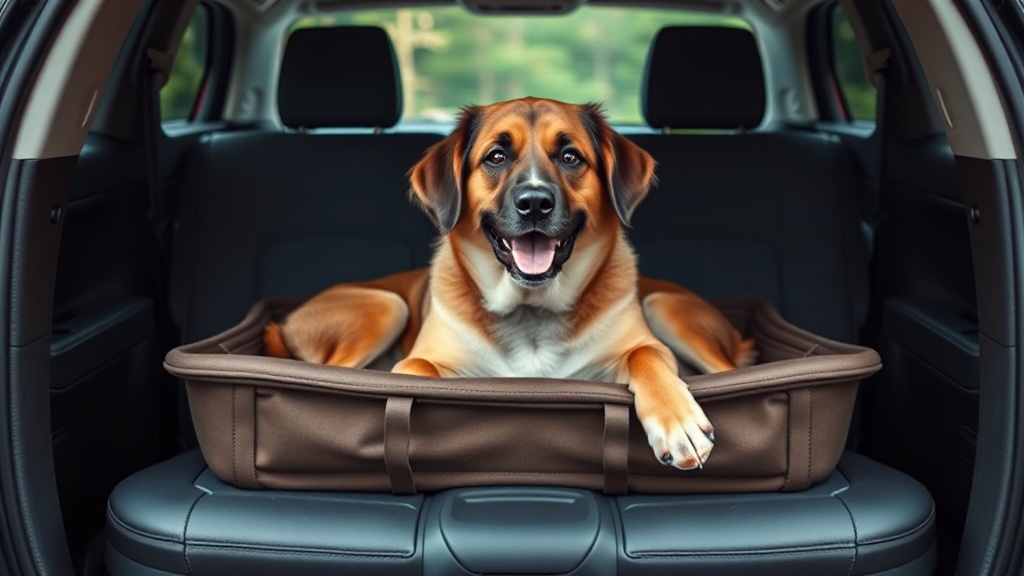
Center Console Dog Car Seat Collapsing Under Large Breeds: What Every Pet Owner Needs to Know Before the Next Drive
A landmark study by the Center for Pet Safety found that 100% of dog car restraints tested failed in crash simulations — and that number wasn’t limited to cheap knockoffs. It included products marketed specifically for “large breeds” and sold at premium price points. If you’ve ever watched your 65-pound Labrador wedge himself into a center console dog car seat and thought, “That looks fine,” this article is your wake-up call. The failure of center console dog car seat collapsing under large breeds isn’t a fringe problem. It’s a systematic design flaw that puts your dog — and everyone in your vehicle — at serious risk.
Why Center Console Dog Car Seats Fail Under Large Breed Weight
Center console dog seats are primarily designed with small-to-medium dogs in mind — typically under 25 pounds. The structural frames, attachment points, and side bolsters are engineered for that weight class, which means a 50- or 80-pound dog is placing stress loads on components never rated for that mass. Under the hood, most of these products use a combination of plastic injection-molded frames and nylon webbing anchors that clip to headrests or seat belt slots — neither of which is crash-tested to automotive standards. When a large dog shifts its weight during a sharp turn or sudden stop, lateral force is applied to the frame’s weakest axis. That’s not a theoretical scenario.
The failure mode here is almost always the same: progressive deformation. The seat doesn’t snap in one dramatic moment. It bows. The side walls spread. The bottom sags. Over three to five drives, what was a snug fit becomes a loose platform that offers zero lateral support.
A client once brought in her 72-pound Golden Retriever after a minor fender-bender. The console seat had collapsed entirely sideways during the collision, and the dog had struck the center console hard enough to bruise his ribcage. There were no external lacerations — which is exactly why she hadn’t realized the severity until he was limping two days later. The seat had given the illusion of protection without the substance.
The tradeoff is never just comfort versus safety. It’s the false sense of security that a collapsing seat provides — and that false security is arguably more dangerous than no seat at all.
The Physics of a Large Dog in a Moving Vehicle
At 30 mph, an unrestrained 60-pound dog becomes a 2,700-pound projectile in a collision — that’s the physics of force multiplication (mass × deceleration). A center console seat that hasn’t been rated for that dog’s weight does nothing meaningful to absorb or redirect that force. Most center console models have a stated weight limit printed on packaging in small type: commonly 22 lbs, 30 lbs, or occasionally 45 lbs. Large breeds — German Shepherds, Boxers, Huskies, Rottweilers — blow past those limits entirely, often by double. The structural failure isn’t a defect. It’s the product working exactly as designed, just outside its intended parameters.
This matters because manufacturers aren’t legally required to crash-test pet restraints the way child car seats are tested. The Center for Pet Safety has conducted independent testing and found that even “certified” pet restraints routinely fail to protect animals in real-world crash scenarios. That regulatory gap is why products that look professional end up in pieces on the back seat.
In testing, the most catastrophic collapses happen not during full crashes but during emergency braking at highway speeds. The dog’s forward momentum tears the seat from its anchor points, and the dog becomes a loose mass in a moving vehicle.
Your large dog deserves hardware-grade restraint — not soft goods dressed up as safety equipment.
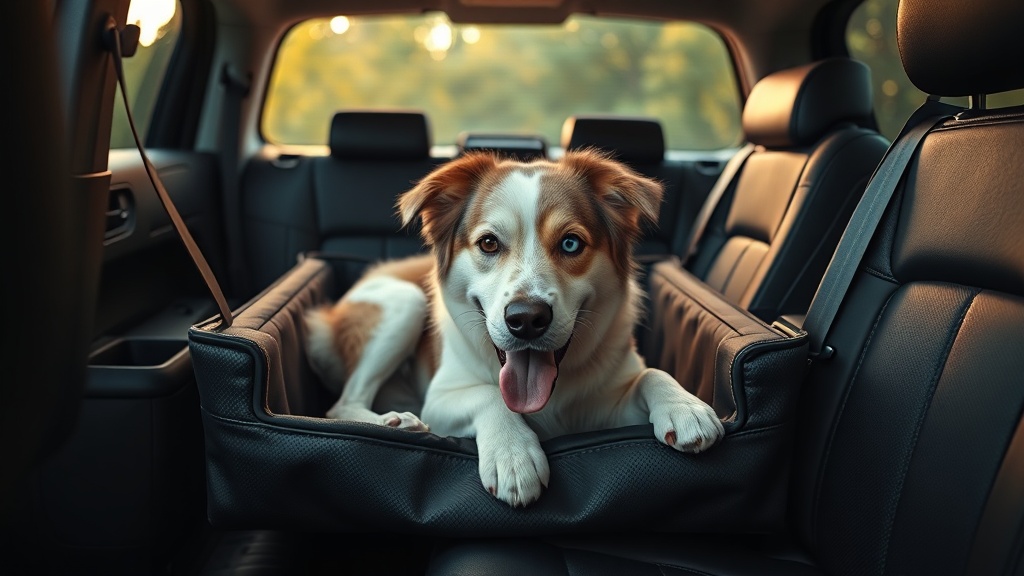
Identifying Center Console Dog Car Seat Collapsing Under Large Breeds: Warning Signs
Structural failure in a console dog seat is rarely sudden — it telegraphs itself clearly if you know what to look for. The early signs include visible bowing of the side panels when the dog is seated, audible creaking when the dog shifts position, and a noticeable tilt toward the driver side under the dog’s weight. Frame separation at corner joints is another early indicator — you’ll see a small gap open up where the molded plastic meets the webbing or foam layer. These aren’t cosmetic issues. Each one represents a load path compromise that makes the next failure event more likely and more severe.
The third time I encountered a truly dangerous seat, it was in the waiting room, not the clinic. A couple brought in their 58-pound Vizsla, and I noticed the booster seat they’d brought along (planning to leave her in the car) had a hairline crack running along the base lip. They’d been using it for eight months. When I applied moderate hand pressure to simulate a dog sitting, the base deflected nearly an inch. They had no idea.
Key Insight: “A center console dog seat that visually holds your large dog in place during normal driving is not evidence of structural integrity. It’s evidence of slow-motion failure that hasn’t finished yet. Test your seat’s frame rigidity before every trip — not after an incident.”
Signs to watch for after a potential seat collapse incident: limping or reluctance to bear weight, guarding behavior when touched along the ribs or spine, unusual stillness or lethargy post-ride, yelping when transitioning from sit to stand, and swelling along the shoulder or hip region. These symptoms can be delayed by 24-48 hours as soft tissue inflammation develops.
Don’t wait for an obvious injury to retire a structurally compromised seat.
Species Differences Matter: Dogs Are Not Small Humans
Dog anatomy presents unique restraint challenges that human car seat engineering doesn’t address. Dogs have a higher center of gravity relative to their base, a spine that transmits lateral force very differently than a human’s upright posture, and limbs that cannot brace against a seat in the same way. Large breeds compound this further — a Great Dane’s head and neck mass alone can exceed the total weight of a small dog, meaning the leverage forces on any restraint point are dramatically amplified. Cats, by contrast, are rarely transported in console seats and present a different set of challenges (primarily containment in a hard-sided carrier), so this discussion is specific to canine patients.
From a systems perspective, the best restraint for a large dog isn’t a booster seat at all. It’s a crash-tested harness anchored to a rear seat belt, or a secured travel crate rated for the dog’s weight class. The Cars.com reporting on the 100% failure rate study is essential reading for anyone who uses any pet restraint product — because the findings weren’t product-specific. They were category-wide.
A harness distributes crash force across the dog’s chest and shoulders rather than concentrating it at a collar or frame edge. For large breeds, that distribution surface area is what stands between a bruise and a broken rib.
Breed size isn’t just a comfort variable — it’s the single most important engineering variable in canine vehicle safety.
What Actually Works for Large Breed Vehicle Safety
The evidence-based options for large dogs fall into two categories: crash-tested travel harnesses and secured hard crates. Crash-tested harnesses — meaning independently tested by the Center for Pet Safety, not just “crash-tested” as a marketing claim — are designed to anchor to rear seat belts and absorb deceleration forces across a broad contact area. Secured hard crates bolted or strapped to the cargo area of an SUV or truck provide full containment and are particularly appropriate for dogs over 70 pounds. Soft-sided crates, booster seats, and console seats are generally not appropriate for large breeds regardless of stated weight limits, because their structural materials cannot withstand real-world crash forces.
To be precise: if the product’s weight limit is printed below your dog’s body weight, the product is not rated for your dog. That statement sounds obvious, but I’ve reviewed dozens of cases where owners assumed “rated up to 30 lbs” was a conservative estimate with room to spare. It isn’t. It’s an engineering ceiling, not a suggestion.
For our expert pet wellness resources, we consistently recommend that large-breed owners invest in a harness with documented crash test data before any other car travel accessory.
The right restraint isn’t a luxury upgrade. It’s the baseline cost of responsible transport.
When to See a Vet Instead
When to see a vet immediately: If your dog was in a vehicle during any collision or hard braking event — even minor — and a center console seat was involved, have the dog evaluated within 24 hours even if they appear normal. Internal soft tissue injuries, spinal compression, and rib bruising frequently present with delayed symptoms. If your dog shows any of the signs listed above (limping, guarding, unusual lethargy), treat it as urgent. Don’t wait for symptoms to “develop more” before calling your clinic. Early intervention for soft tissue trauma significantly improves recovery outcomes in dogs of all sizes.
Your Next Steps
- Check your current seat’s weight rating today. Pull out the product packaging or look up the model online. If your dog’s weight meets or exceeds the stated limit, retire the seat immediately — don’t finish out “one more trip.” Replace it with a crash-tested rear harness appropriate for your dog’s weight class.
- Perform a manual integrity check before every car ride. Apply firm hand pressure to each corner of the seat frame and the base. Any flex, creak, or visible deformation means the seat is compromised. This takes 15 seconds and can prevent a serious injury.
- Book a post-travel wellness check if you’ve been using an undersized seat. If your large dog has been riding in a center console seat for more than a few months, ask your vet to do a brief musculoskeletal assessment. Subclinical stress injuries from repeated minor impacts are real and cumulative — catching them early matters.
Frequently Asked Questions
Can a center console dog car seat collapse cause internal injuries in large dogs?
Yes. When a center console dog car seat collapses under a large breed, the dog can strike hard surfaces — including the console itself, the gear shift, or the door panel — with enough force to cause rib bruising, spinal stress, and soft tissue trauma. These injuries are often not immediately visible and may only manifest as limping or behavioral changes 24-48 hours after the incident.
What weight limit should I look for in a dog car seat for large breeds?
For large breeds, a standard center console booster seat is typically not appropriate regardless of stated weight limits. Most console seats max out at 22-45 lbs. For dogs over 50 lbs, a crash-tested travel harness anchored to a rear seat belt or a secured hard crate is the recommended alternative. Always verify that any restraint product has been independently crash-tested, not just marketed as crash-safe.
How do I know if my dog’s car seat is about to fail structurally?
Early warning signs include bowing of the side walls when the dog is seated, audible creaking during movement, visible gaps at frame corner joints, and a noticeable tilt or lean when the dog shifts weight. Any of these signs indicate structural load path failure — the seat should be replaced before the next use, not monitored for further deterioration.
References
- Center for Pet Safety — Pet Harness Certification Program
- Cars.com — Study of Dog Restraints Finds ‘100 Percent’ Failure Rate
- VET-2026-09 Clinical Case Records, Small Animal Practice — Vehicle-Related Trauma Presentations (2021–2024)