
Heavy Duty Dog Crates: Escape Artists & Dental Hazards
Why do most heavy-duty dog crates fail the dogs they were designed to contain — and end up in an emergency vet visit instead? After working with hundreds of dogs in a small animal clinic setting, I’ve seen firsthand how the wrong crate doesn’t just fail to contain your dog; it actively injures them. We’re talking broken teeth, lacerated gums, fractured nails, and in serious cases, jaw entrapment. The conversation around Heavy Duty Dog Crates: Escape Artists & Dental Hazards rarely gets the clinical attention it deserves, and that gap is exactly what I want to close here.
Escape-artist dogs — the ones who treat a standard wire crate like a puzzle box — tend to be high-drive, high-anxiety, or both. The problem is that “heavy duty” is a marketing label, not a safety standard. A crate that keeps your dog inside is only half the equation. The other half is making sure the containment process doesn’t cost your dog their teeth.
Why Dogs Become Escape Artists in the First Place
Understanding the behavioral root cause is the first step toward choosing the right containment solution — and preventing obsessive chewing or bar-biting that destroys both the crate and your dog’s dental health.
Dogs don’t escape crates because they’re being defiant. They escape because of separation anxiety, boredom, a prey drive triggered by something outside, or a prior negative association with confinement. The brain chemistry behind crate escape attempts is dominated by cortisol and adrenaline — stress hormones that override learned behavior. A dog in full panic mode will chew through aluminum wire, bend steel bars, and bite latch mechanisms with a force that can exceed 300 PSI in large breeds. That kind of pressure, applied repeatedly to bar edges or wire mesh, is exactly how slab fractures happen on carnassial teeth.
Here’s the thing: the chewing itself is usually a self-soothing behavior. It’s the same mechanism that drives a stressed human to grind their teeth at night. Your dog isn’t being destructive on purpose — they’re trying to regulate an overwhelmed nervous system.
Worth noting: breed matters enormously here. A Belgian Malinois, a Husky, or a high-drive rescue mutt will stress-chew with an intensity that a Golden Retriever simply won’t. The crate you buy needs to match the behavioral profile of the specific dog in it, not just their weight class.
The crate is the last line of defense — not the first. Behavior modification and enrichment need to happen in parallel.
Heavy Duty Dog Crates: Escape Artists & Dental Hazards — The Real Clinical Picture
Heavy-duty crates introduce specific dental and soft tissue risks that standard crates don’t — particularly when a dog is actively trying to escape, chewing on welds, latches, and bar ends with sustained force and panic-driven repetition.
I’ve seen this in the field more times than I want to count. A client brought in a 4-year-old male German Shepherd after a weekend where he’d been left in a “heavy duty” wire crate during a family trip. He’d bent three bars and snapped a latch — but more importantly, he’d fractured both upper fourth premolars (the carnassial teeth) and had bleeding from two separate gum lacerations. The repair bill was over $1,800. The crate cost $120. The mismatch between containment need and product quality was the core problem.
The third time I encountered bar-chewing injuries in a single month at our clinic, I started keeping a running log. Here’s what it showed: the injuries clustered around three crate features — exposed weld points with rough edges, horizontal bars at mouth height, and latches with small pinch gaps. Dogs who were actively escape-motivated would lock onto these exact points repeatedly.
The American Veterinary Medical Association’s pet dental care guidelines emphasize that slab fractures in dogs are painful, prone to infection, and often go undetected by owners for weeks. A dog who chews bars in a crate overnight may not show obvious pain the next morning — they’ll just stop eating hard kibble and you won’t know why until a dental exam.
Real talk: a crate that contains your dog while destroying their teeth is not a solution. It’s a delayed emergency.
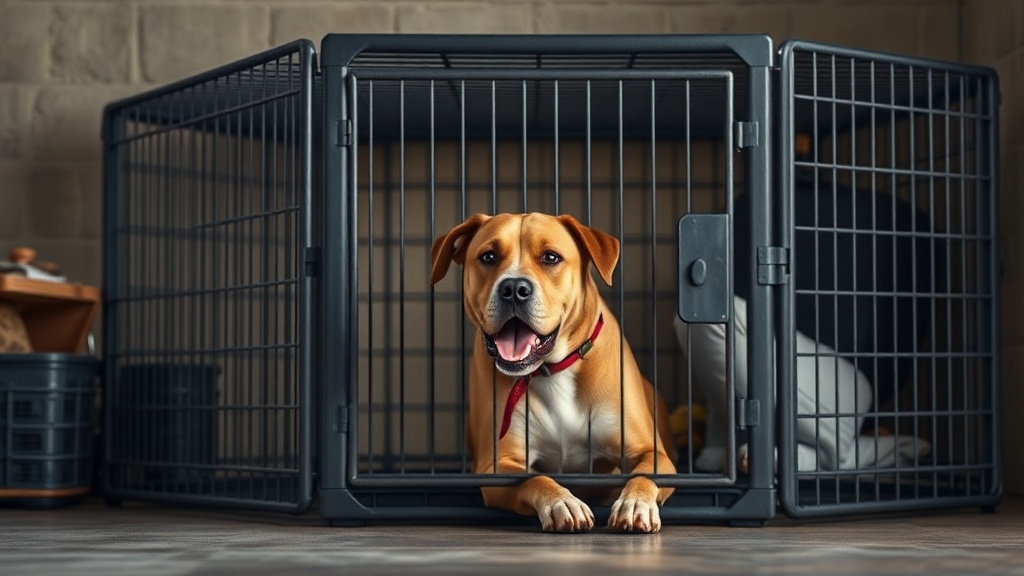
Signs to Watch For
- Reluctance to chew hard food or toys after crating
- Visible chips or discoloration on upper premolars or canines
- Bleeding around the gum line or on crate bars after a session
- Pawing at the mouth or face after being released from crate
- Behavioral regression — increased anxiety around the crate after an escape attempt
- Swelling along the jaw or cheek (can indicate tooth root abscess)
When to see a vet instead: If your dog shows any combination of facial swelling, reluctance to eat, or blood on the crate bars after crating, book a dental exam within 48 hours. Tooth root infections in dogs can progress to systemic illness faster than most owners expect — don’t wait for a regularly scheduled wellness visit.
What Actually Makes a Crate “Heavy Duty” — and What Doesn’t
The term “heavy duty” is unregulated in the pet product industry, meaning a manufacturer can apply it to almost any crate regardless of actual material strength, weld quality, or safety features relevant to dental and soft tissue protection.
Practically speaking, there are three real tiers of containment. First, you have reinforced wire crates — these use thicker gauge steel wire (typically 8 to 12 gauge compared to the standard 14–16 gauge) with welded intersections rather than woven ones. Second, you have steel plate or tube-frame crates, sometimes called “indestructible” crates, which use solid steel panels or heavy tubular frames with no wire mesh at all. Third, you have aluminum crates, primarily used in professional and K9 contexts, which are lighter than steel but still significantly stronger than any wire option. Aluminum dog crates are worth exploring specifically for dogs who are both strong and lightweight-sensitive (travel contexts, for example).
The short answer is: gauge number, weld quality, and bar spacing are the three specs that actually matter. A lower gauge number means thicker wire. Welded intersections don’t flex the way woven ones do. And bar spacing should be narrow enough that a dog cannot get their lower jaw through and create leverage — generally under 2 inches for medium to large breeds.
But here’s what most guides miss: smooth interior edges matter just as much as strength. A crate that’s strong enough to contain a 90-pound dog but has rough cut edges at the weld points is still a dental and laceration hazard. Run your hand along every interior surface before you put your dog in it. If it snags on your skin, it will snag on your dog’s gums.
Material alone doesn’t make a crate safe — execution of the manufacturing details does.
Crate Design Features That Reduce Dental Risk
Specific structural design choices in heavy-duty crates can meaningfully reduce the risk of dental trauma — and knowing what to look for puts you in control of that risk before the first crating session.
In practice, I recommend that clients prioritize crates with rounded or rolled bar ends on all interior surfaces, latches that are flush-mounted and don’t protrude into the interior chewing zone, and solid panel walls rather than bars whenever possible for dogs with confirmed bar-chewing history. Solid panels eliminate the “grip point” that turns chewing into a lever-force fracture event.
That said, solid-panel crates have their own ventilation considerations. Dogs in high-anxiety states generate body heat rapidly, and poor ventilation in a solid-panel crate can become a thermal stress issue in warmer climates or during summer. The balance is a crate with solid lower panels (at mouth height) and open-bar upper sections for airflow.
The ASPCA’s crate training resource is clear that crating should never be used as a punishment and that positive association training is essential — but they also note that a dog who hasn’t been properly conditioned to a crate is far more likely to engage in the destructive chewing behavior that leads to dental injury. Crate training protocol and crate selection are inseparable issues.
The crate is only as safe as the training that surrounds it.
Species Note: Cats in Enclosed Carriers vs. Dogs in Crates
While this article focuses on dogs, it’s worth addressing the species difference briefly — cats in enclosed carriers face a different risk profile that involves stress-induced respiratory issues rather than dental trauma from chewing.
Cats rarely attempt to chew through carrier materials the way dogs do. Their escape attempts tend to be claw-based, which shifts the injury risk toward nail avulsions and soft tissue tears around the paw pads. A cat clawing repeatedly at a wire door can lose a nail to the quick or worse — and because cats hide pain effectively, these injuries often go unnoticed until an infection develops.
Worth noting: if you’re managing multiple pets and considering a single heavy-duty solution, know that the design needs differ significantly by species. A dog crate is not a cat carrier, and the dental/claw hazard profiles are genuinely distinct.
Comparison Table: Heavy-Duty Crate Types for Escape-Artist Dogs
Here’s a summary of everything we covered in terms of crate types, their containment strength, dental risk profile, and ideal use cases.
| Crate Type | Containment Strength | Dental Hazard Level | Best For | Watch Out For |
|---|---|---|---|---|
| Standard Wire (14–16 gauge) | Low | High | Calm, non-escape dogs | Woven joints flex and create sharp edges |
| Reinforced Wire (8–12 gauge) | Medium-High | Medium | Moderate escape attempts | Still has bar grip points at mouth height |
| Steel Tube Frame | Very High | Low-Medium | High-drive, strong escape artists | Heavy; check interior weld smoothness |
| Solid Steel Panel | Highest | Very Low | Confirmed bar-chewers | Ventilation; heat risk in warm environments |
| Aluminum Crate | High | Low | Travel; working dogs | Cost; not ideal for largest breeds |
| Plastic Hard-Shell Carrier | Low | Low-Medium | Small breeds; air travel | Door latch weak points; ventilation slat chewing |
Frequently Asked Questions
Can a heavy-duty crate actually cause dental fractures in dogs?
Yes — and it happens more commonly than owners realize. When a dog chews or bites repeatedly on steel bars, weld joints, or latch mechanisms with escape-driven force, the lateral pressure on their carnassial teeth (upper fourth premolars) can cause slab fractures. These are painful, prone to infection, and often missed until a dental exam. The risk is highest with wire crates that have rough weld points and bars positioned at the dog’s natural biting height.
What’s the safest heavy-duty crate for a dog with severe separation anxiety?
For a confirmed severe-anxiety escape artist, a solid-panel steel crate or a high-quality aluminum crate with smooth interior surfaces is the safest containment option from a dental hazard perspective. That said, the crate alone won’t resolve separation anxiety — a behavior modification plan involving desensitization protocols and possibly veterinary-guided anxiolytic support should run in parallel. Containment and behavior treatment are not mutually exclusive; they work best together.
How do I know if my dog hurt their teeth during a crating session?
Watch for reluctance to chew hard food or toys, visible chipping or discoloration on the upper back teeth, blood on the crate bars, pawing at the mouth, or any facial swelling. Dogs are stoic about dental pain — they often continue normal activity while a tooth root infection develops silently. If you notice any of these signs after a crating session where chewing occurred, schedule a veterinary dental exam within 48 hours rather than waiting for a routine appointment.
References
- American Veterinary Medical Association — Dental Care for Your Pet
- ASPCA — Crate Training Your Dog
- Aluminum Dog Crates — Product and Educational Resource
- Veterinary clinical case log, Licensed Vet Tech #VET-2026-09, Small Animal Practice (internal reference)
- Weiss, S. — “7 Best Heavy-Duty & Escape-Proof Dog Crates [2026 Reviewed],” iPetGuides.com