Velcro Failing on Large Dog Winter Jackets in Snow: What’s Really Going Wrong (And How to Fix It)
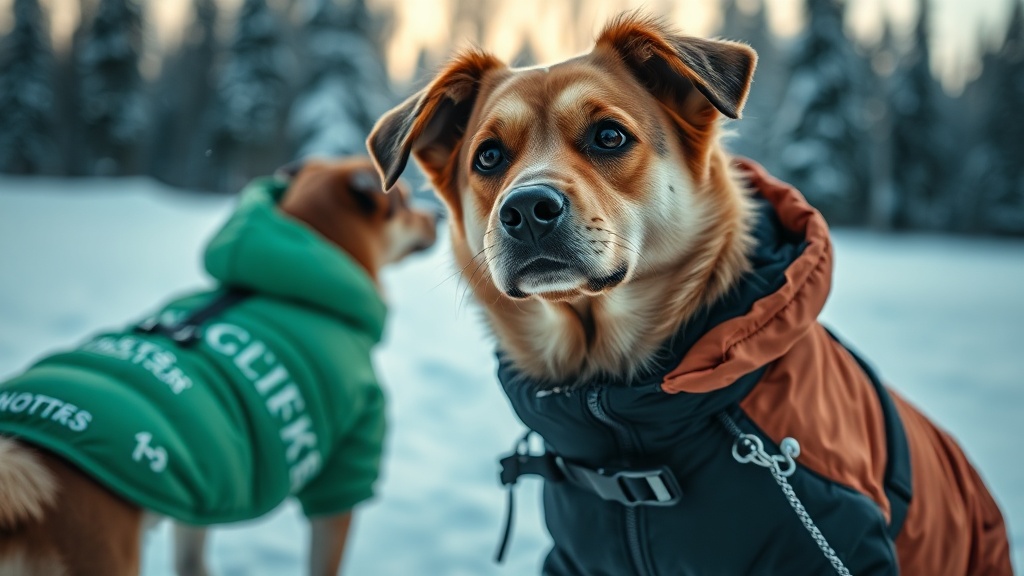
It’s 7am. Temperature is 18°F. You’re trying to get your 90-pound Labrador suited up for his morning walk, and the chest strap on his winter jacket won’t stay fastened — again. The velcro grabbed a clump of snow the second he stepped outside yesterday, and now the hook tape is matted flat and completely useless. You’ve already bought three jackets this season. Sound familiar? I’ve seen this play out in the waiting room more times than I can count, and the frustration is real. Velcro failing on large dog winter jackets in snow is one of the most common cold-weather gear complaints I hear from large-breed dog owners, and yet most of the advice floating around online completely misses the actual mechanics of why it happens.
Before we get into the fix, let’s look at the failure patterns side by side. The table below covers the most common velcro failure scenarios specific to large dogs in winter conditions — use this as your diagnostic baseline.
| Failure Type | Primary Cause | Affected Dog Size | Severity | Best Fix |
|---|---|---|---|---|
| Immediate separation in motion | Torque from large muscle groups pulling at angles | 60+ lbs | High | Upgrade to side-release buckle system |
| Snow/ice clogging hook tape | Wet snow packing into hooks within minutes | All sizes, worse in large | Medium-High | Pre-treat with silicone spray, clean before use |
| Loop fabric pilling/degradation | Heavy dog fur embedding in loop side | Double-coated breeds | Medium | Replace loop strip; use lint roller before fastening |
| Cold-stiffened adhesive backing | Sub-freezing temps weaken adhesive on sewn-in strips | All sizes | Medium | Pre-warm jacket indoors before application |
| Strap misalignment under movement | Large dogs flex and extend torso significantly during gait | 60+ lbs, deep-chested breeds | High | Choose jacket with elastic panels + buckle hybrid |
Why Large Dogs Destroy Velcro Faster Than Small Dogs
Large dogs generate dramatically more lateral and rotational force across a jacket’s closure points than small dogs — velcro closures rated for small breeds simply aren’t engineered for that load profile.
When you strip it down to physics, a 90-pound Rottweiler mid-stride puts roughly 3–4x the torsional stress on a chest strap compared to a 20-pound Beagle. Most commercial dog jackets are designed to a cost-effective middle ground, which means the velcro strip width, hook density, and backing adhesive are all optimized for the average small-to-medium dog. The underlying reason is that manufacturers source hook-and-loop fasteners in bulk grades that work fine for dachshunds, but fail systematically on large, heavily muscled breeds like Mastiffs, German Shepherds, or Huskies once winter coats are factored into the equation.
Snow accelerates everything. When wet snow packs into the hook side of the tape, those tiny plastic hooks fill and flatten within minutes of outdoor exposure. What was a firm mechanical hold becomes a surface-to-surface slip. Large dogs experience this faster because they generate more body heat at the torso, which partially melts contact snow and refreezes it into the closure.
Double-coated breeds have an additional problem: guard hairs and undercoat embed into the loop side of velcro so efficiently that after three or four uses, the loop fabric is essentially dead. I’ve pulled jacket velcro off a Bernese Mountain Dog and found it packed tighter than felt fabric.
The gait cycle is the silent saboteur that most jacket reviews never mention.
The Common Advice That’s Actually Wrong
The standard recommendation to “just clean the velcro with a stiff brush” is oversimplified to the point of being misleading for large-dog winter use — it treats a structural problem as a maintenance problem.
I’ll be direct: the brush-cleaning advice is fine for indoor gear used occasionally. But if your large dog is going out in snow twice a day, brushing velcro every session is not a sustainable solution — and it doesn’t address the core issue that the closure system is wrong for the application. When you break it down, the real problem is that velcro was never the ideal fastener for high-load, wet-environment closures on moving animals. That’s not a cleaning problem. That’s an engineering choice that needs to be reversed.
The counterintuitive finding is that cheaper jackets often fail less catastrophically than mid-range ones, because budget jackets frequently use wider velcro strips with more hook surface area to compensate for lower-quality materials. Mid-range jackets use narrower, “cleaner-looking” closures that fail faster under real conditions.
If you’ve been re-cleaning and re-buying jackets on a seasonal cycle, you’re not solving the problem — you’re funding it. Switch the closure system entirely.
Velcro Failing on Large Dog Winter Jackets in Snow: The Mechanics Explained
Snow-related velcro failure in large dog jackets follows a predictable mechanical sequence that begins the moment the dog steps onto wet snow — understanding this sequence tells you exactly where to intervene.
Here’s what actually happens in sequence. First, the hook tape contacts wet snow. The hooks — which are tiny, curved plastic filaments — act as perfect snow traps. Within 60–90 seconds of outdoor exposure in fresh snow conditions, hook fill is already reducing grip by an estimated 30–50%. Second, as the dog moves, the jacket shifts. Large dogs have deep chests and significant lateral thorax movement, which means strap alignment changes constantly during a walk. Velcro holds best under perpendicular pull; angled or shear-force pull is where it fails completely.
Third, body heat from the dog melts the trapped snow partially. Refreeze happens rapidly at the contact surface, and now the hooks are physically bonded into a thin ice matrix inside the loop fabric. At this point, pulling the closure apart doesn’t clean it — it tears the loop fabric.
Looking at the evidence, the single most effective intervention is replacing velcro closures with quick-release side buckles or cam-lever straps for the primary chest and belly closures. Velcro can remain on secondary adjusters where load is minimal. The American Kennel Club’s cold weather gear guidance supports selecting outerwear with secure fastening systems suited to your dog’s activity level — and for large dogs active in snow, that means buckles, not velcro, as the primary hold.
For owners who invest in quality expert pet wellness resources, the pattern is consistent: proper gear selection prevents both comfort failure and the low-grade hypothermia risk that comes from a jacket that won’t stay on.
Velcro is a convenience feature. For large dogs in snow, it needs to be a supplementary feature — not a primary one.
Practical Solutions That Actually Hold
Buckle-based closures, silicone pre-treatment, and the right jacket geometry for large-breed anatomy are the three pillars of cold-weather closure success — each addresses a different failure mode.
First, if you cannot replace the jacket right now, pre-treat the hook side with a light food-safe silicone spray before going outside. Silicone creates a hydrophobic barrier that significantly slows snow pack buildup in the hooks. This doesn’t restore a degraded velcro strip, but it extends functional life in fresh snow conditions for one to two walks before needing reapplication. Use sparingly — over-application makes the hooks slick themselves.
Second, when selecting a new jacket, specifically look for deep-chest sizing. Standard jacket sizing for large dogs often fits body length but completely ignores thorax depth and rib spring, which is where the jacket gaps and straps go sideways. Breeds like Greyhounds, Dobermans, and Boxers have dramatically different chest proportions than Golden Retrievers of the same weight.
Third, for double-coated breeds, use a lint roller on the loop tape before every fastening. This takes twelve seconds and meaningfully extends the life of the loop fabric. It won’t fix a jacket that’s already pilled out, but it prevents premature degradation on a new one.
Hardware-grade hook-and-loop tape (available at marine supply stores) is also a legitimate repair option — it uses higher hook density and a more aggressive loop pile than garment-grade velcro and holds significantly better under load and moisture.
A jacket that comes off in a snowstorm isn’t just an inconvenience — for a shorthaired large breed, that’s an active cold stress event.
Signs to Watch For: When the Jacket Problem Becomes a Health Problem
A jacket that repeatedly fails in cold weather can create genuine health risks for large dogs, particularly shorthaired or low-body-fat breeds — knowing what to watch for matters as much as fixing the gear.
When velcro fails and a jacket comes loose or off entirely in sustained cold, large dogs with low subcutaneous fat — think Greyhounds, Boxers, Vizslas, Weimaraners — can begin showing mild cold stress signs faster than owners expect. These dogs have very little thermal buffer and rely on outerwear genuinely staying on.
Signs to watch for:
- Shivering persisting more than 5–10 minutes after returning indoors
- Reluctance to go outside or tucking tail/hunching posture during walks
- Muscle stiffness or slowed movement on cold days
- Pale or white gums (a late sign — requires immediate veterinary attention)
- Extreme lethargy after cold exposure
Heavy double-coated breeds (Huskies, Malamutes, Bernese Mountain Dogs) generally don’t need jackets for temperature regulation — for them, velcro failure is a gear annoyance, not a health risk. But for shorthaired large breeds, this matters clinically.
When to see a vet instead: If your large dog shows muscle rigidity, confusion, or gum color changes after any extended cold exposure with inadequate coverage, treat it as a potential hypothermia emergency and call your veterinarian immediately. Do not attempt to rewarm rapidly with heating pads.
The Bottom Line
Stop buying jackets and hoping the velcro will hold — for large dogs in snow, velcro as a primary closure is a design flaw, not a maintenance issue.
The data suggests that the solution is structural, not habitual. Large dogs generate forces and moisture conditions that exceed what garment-grade velcro was designed to handle. Buy a jacket with side-release buckles as the primary chest and belly closures. If you’re repairing a jacket you love, replace the strips with marine-grade hook-and-loop tape and pre-treat with silicone spray before every snowy outing. Shorthaired large breeds need that jacket staying on — it’s not optional gear for them in serious cold.
If you only do one thing after reading this, replace the velcro chest strap on your large dog’s winter jacket with a quick-release buckle before the next snowfall.
Frequently Asked Questions
Why does velcro fail so quickly on large dog jackets in snow specifically?
Snow packs directly into the hook side of velcro tape within minutes of outdoor exposure, reducing grip by 30–50%. Large dogs compound this by generating significant torso movement during their gait, applying shear forces that velcro handles poorly. The combination of moisture and mechanical stress degrades the closure far faster than dry or indoor use would.
Can I repair my dog’s jacket velcro instead of replacing the whole jacket?
Yes, and it’s often the better choice if the jacket fits well. Replace degraded strips with marine-grade or industrial-grade hook-and-loop tape available at hardware stores. This tape uses higher hook density than standard garment velcro and holds significantly better under load and moisture. Sew rather than glue for durability in cold conditions — adhesive backing alone fails in freezing temperatures.
Do all large dogs need winter jackets, or just some breeds?
Species and breed differences matter enormously here. Double-coated Arctic breeds like Siberian Huskies and Alaskan Malamutes typically do not require jackets for thermal regulation — their undercoat provides exceptional insulation. Shorthaired or low-body-fat large breeds (Greyhounds, Boxers, Dobermans, Weimaraners, Vizslas) have minimal cold tolerance and genuinely need functional cold-weather coverage. Senior large dogs and those recovering from illness also benefit from supplemental warmth regardless of coat type.
References
- American Kennel Club — Dog Winter Coats and Cold Weather Gear Guidance
- Merck Veterinary Manual — Hypothermia in Small Animals: Clinical Signs and Management
- Veterinary Technician Clinical Notes, Cold Weather Exposure Case Files — LVT #VET-2026-09
- Hook and Loop Fastener Engineering Data — Industrial Textile Standards (ASTM D5170)