Cross Contamination in Dog Food Manufacturing Plants: A Vet Tech’s Honest Review
It’s a Tuesday morning at the clinic. A family brings in their three-year-old Labrador — vomiting since midnight, lethargic, refusing water. The owner swears the dog didn’t get into anything unusual. Same food, same routine. By afternoon, we’ve confirmed Salmonella. Then I pull up the FDA recall database and find that very brand is under investigation for cross contamination at its manufacturing facility. This is not a rare story. And when I started digging into what actually happens inside pet food plants, I was genuinely unsettled — and I’ve been doing this for over a decade.
If you’ve searched for a cross contamination in dog food manufacturing plants vet review, you want straight answers. Not PR-speak, not vague reassurances. Here’s what I know from clinical work, industry documentation, and peer-reviewed research.
Quick Comparison: Cross Contamination Risk by Manufacturing Type
Before we go into mechanisms and consequences, this table gives you an at-a-glance breakdown of how different manufacturing setups affect contamination risk — so you can use it as a reference while reading the sections below.
| Manufacturing Type | Contamination Risk Level | Common Contaminants | Regulatory Oversight | Consumer Transparency |
|---|---|---|---|---|
| Co-manufacturing (shared facility) | High | Salmonella, allergens, drug residues | FDA FSMA partial | Low |
| Dedicated single-brand facility | Moderate | Mycotoxins, heavy metals | FDA FSMA full | Moderate–High |
| Raw/freeze-dried production | Very High | Salmonella, Listeria, E. coli | FDA limited | Variable |
| Imported ingredients (contract) | High–Very High | Melamine, pesticides, fungi | FDA import screening | Very Low |
| Small-batch artisan producers | Low–Moderate | Allergens, surface bacteria | State-level, inconsistent | High |
What Cross Contamination in Dog Food Manufacturing Plants Actually Means
Cross contamination occurs when a harmful substance — biological, chemical, or physical — is unintentionally transferred from one surface, ingredient, or product to another during production.
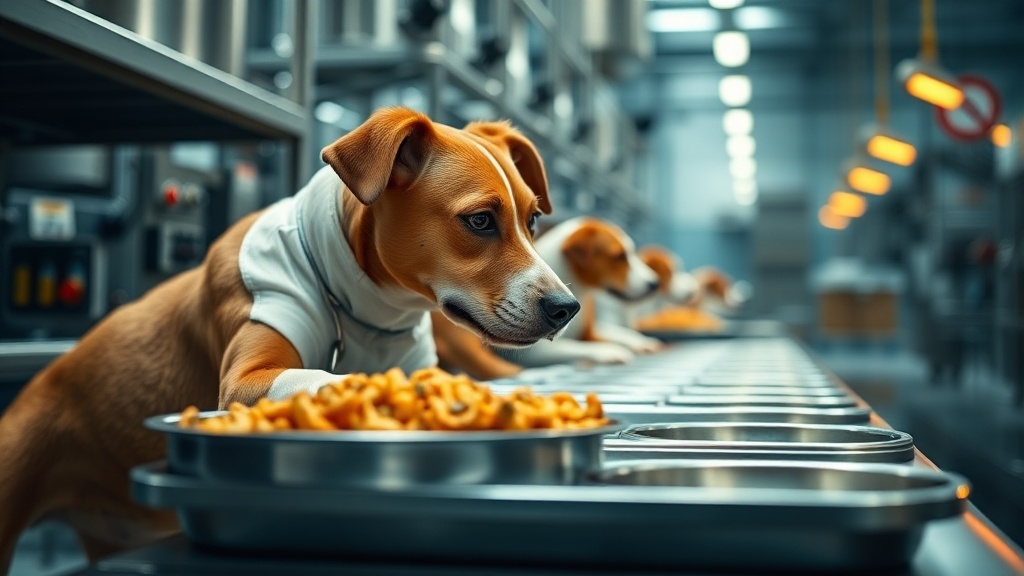
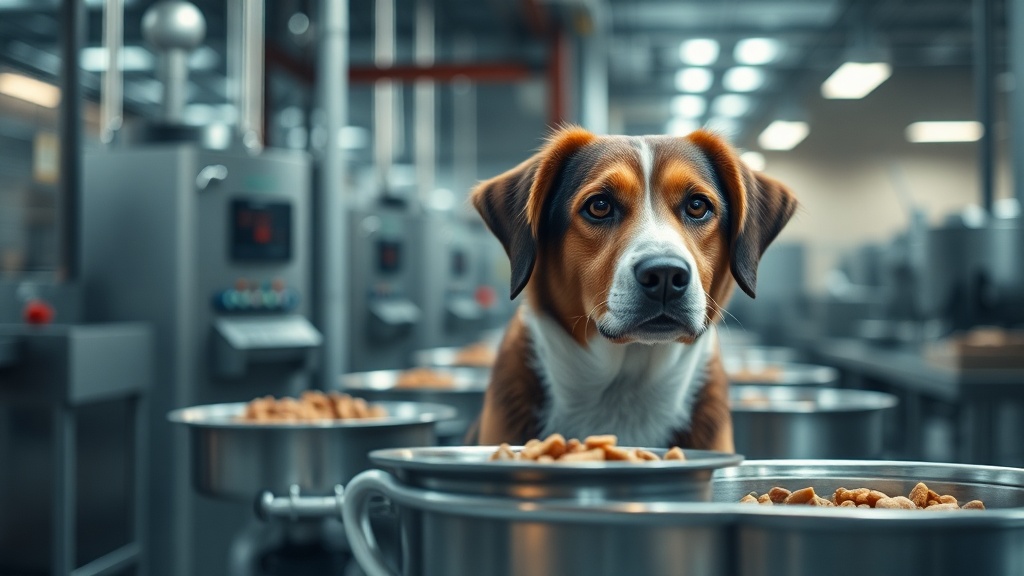
In pet food manufacturing, this isn’t theoretical. Shared conveyor belts, recycled processing water, insufficiently sanitized mixing equipment, and staff moving between raw and finished product zones are all documented pathways. The challenge is that dog food facilities often operate on razor-thin margins, and thorough sanitation takes time that cuts into production throughput.
The three primary categories of cross contamination are biological (pathogens like Salmonella, Listeria, and E. coli), chemical (pesticide residues, cleaning agents, drug carryover from livestock feed equipment), and physical (metal fragments, bone shards from adjacent processing lines). Each poses a distinct threat to your dog’s health — and in some cases, to yours.
Here’s the part that surprises most pet owners: dogs are not the only ones at risk.
Salmonella shed in dog feces from contaminated food has been directly linked to human illness by the CDC, particularly in households with children, elderly individuals, or immunocompromised people. Every case of contaminated dog food is also a potential public health event.
How Cross Contamination in Dog Food Manufacturing Plants Gets Past Quality Control
Most consumers assume that FDA oversight catches contamination before product ships. The reality is that regulatory inspections are infrequent, and post-market recalls are often the first signal that something went wrong.
The FDA’s Food Safety Modernization Act (FSMA) extended preventive controls to pet food manufacturers — a significant step forward. But enforcement depends on facility compliance, and many co-manufacturers produce both human food and pet food on shared lines. When a line switches from a human-grade product to a pet formula, the cleaning protocols aren’t always equivalent.
I’ve seen this in the field the hard way. A client came in with a five-year-old Golden Retriever showing signs of acute hepatic stress — elevated ALT, jaundice, lethargy. We eventually traced it to a boutique dog food brand that had switched co-manufacturers without notifying retailers. The new facility had a documented history of aflatoxin-positive grain handling. The dog survived, but it took months of liver support therapy and cost the family over $4,000 in veterinary bills.
The underlying reason is that third-party testing is voluntary for most U.S. pet food brands. Unless a company actively chooses to submit batches for independent laboratory analysis, no one outside the plant may know about contamination until dogs start getting sick.
Looking at the evidence, the brands with the cleanest records tend to share one trait: they own and operate their own dedicated facilities and publish batch-level testing results. That’s not common. Most mid-tier brands rely on co-manufacturers.
Species-Specific Vulnerability: Why Dogs Are Especially Susceptible
Dogs process certain toxins differently than cats or humans, making some contaminants disproportionately dangerous for them — especially mycotoxins and certain chemical residues.
Aflatoxin B1, produced by Aspergillus molds on corn and other grains, is one of the most potent hepatotoxins known. Dogs are significantly more sensitive to aflatoxin than cats or humans. A 2021 outbreak involving Sportmix and related brands resulted in dozens of confirmed dog deaths and hundreds of reported illnesses before a recall was issued — the FDA’s animal food recall database documents the full scope of that event.
Cats, by comparison, tend to show more chronic, subtle signs of low-level toxin exposure rather than acute collapse. Small dogs are at greater risk than large breeds for the same contamination level simply due to body weight and proportional dose.
Cross contamination from drug residues is another under-discussed issue. Livestock growth promotants and antibiotics used in animals raised for rendering can carry over into pet food ingredients. Repeated low-level antibiotic exposure through food is a legitimate concern for antimicrobial resistance — a problem that affects both pets and the humans who handle them.
Signs to Watch For
If your dog’s food has been affected by manufacturing cross contamination, symptoms may appear within hours or take weeks, depending on the contaminant. Watch closely for:
- Gastrointestinal: Vomiting, diarrhea (especially bloody), excessive gas, refusal to eat
- Neurological: Tremors, seizures, incoordination, sudden behavioral changes
- Hepatic (liver-related): Jaundice (yellowing of eyes/gums), dark urine, profound lethargy
- Systemic: Fever, rapid weight loss, pale mucous membranes
- Dermatological: New skin reactions, hair loss, chronic itching — which can signal allergen cross contamination
Statistically, the majority of mild Salmonella cases in dogs go unreported because symptoms mimic routine dietary upset. That’s how contamination cycles persist.
What You Can Actually Do About It
Practical steps exist — and they don’t require switching to homemade food or abandoning commercial brands entirely. What they require is informed selection and active monitoring.
Start by identifying where your dog’s food is manufactured. The brand name on the bag is often not the manufacturer. You can search the FDA’s registration database or contact the company directly and ask: “Is this product made in a dedicated facility or a co-manufacturing plant? Do you conduct third-party batch testing?” If a brand can’t or won’t answer that, walk away.
The third time I encountered a severe adverse food reaction that traced back to a manufacturing issue, it was a three-cat household — one cat on a diet that shared a production line with a dog food formula that had tested positive for Listeria. The cats weren’t eating the contaminated product, but the owner was. The contamination had transferred to the human through routine feeding and handling. Thorough handwashing after handling any pet food — wet or dry — is non-negotiable.
For owners looking to stay ahead of recalls, PetFoodRecalls.info aggregates FDA and Health Canada recall notices and sends email alerts. Bookmark it. Set up notifications. Don’t wait for the news cycle to tell you there’s a problem.
You can also explore our expert pet wellness resources for deeper dives into ingredient safety, nutrition planning, and how to evaluate food brands from a veterinary perspective.
When you break it down, the most effective consumer action is rotating protein sources across brands rather than feeding one food exclusively. This limits cumulative exposure to any single contaminant source and provides nutritional breadth.
When to See a Vet Instead
Do not wait to see if symptoms improve on their own if your dog shows any of the following: bloody stool or vomit, jaundice, seizures, collapse, complete food refusal lasting more than 24 hours, or if a recall notice has been issued for food your dog has recently eaten. These are emergency presentations. Bring the food bag — including lot number and best-by date — to your appointment. That information is critical for reporting and for your vet’s differential diagnosis.
The Bottom Line
Cross contamination in dog food manufacturing plants is a real, documented, recurring problem — not a fringe concern for overprotective owners. The regulatory framework exists but is not airtight. The burden of safety currently falls partly on consumers, and the brands that earn trust are the ones with transparent manufacturing practices, dedicated facilities, and published third-party testing. Don’t buy from brands that can’t tell you where their food is made. It’s that simple.
If you only do one thing after reading this, sign up for FDA pet food recall alerts and check the current list against every bag in your pantry right now.
Frequently Asked Questions
Can cross contamination in dog food make humans sick?
Yes. Pathogens like Salmonella and Listeria present in contaminated dog food can transfer to humans through handling the food, touching contaminated bowls, or contact with an infected dog’s feces. Children, elderly individuals, and immunocompromised people face the highest risk. Rigorous handwashing after every feeding is essential.
How do I know if my dog’s food brand uses a co-manufacturer?
Contact the brand directly and ask for the manufacturing facility name and whether it is a dedicated or shared production site. You can also check product labels for the “manufactured by” versus “distributed by” distinction. Third-party certification logos (NSF, AAFCO compliance statements combined with independent audit claims) are positive indicators, though not a guarantee.
Is raw dog food more vulnerable to cross contamination than kibble?
Yes, in most cases. Raw and freeze-dried formats skip the high-heat processing step that kills pathogens in extruded kibble. This means any contamination present in the raw ingredients — Salmonella, E. coli, Listeria — survives to the finished product. Raw feeding can be done responsibly, but it requires even stricter sourcing scrutiny and handling hygiene than commercial dry food.
References
- FDA — Animal Food Recalls and Withdrawals Database
- CDC — Salmonella: Transmission, Symptoms, and Prevention
- PetFoodRecalls.info — Aggregated Pet Food Recall Alerts
- Dzanis, D.A. (2008). Regulatory Considerations for Pet Food. Topics in Companion Animal Medicine, 23(3), 117–120.
- Nemser, S.M., et al. (2014). Investigation of Listeria, Salmonella, and toxigenic Escherichia coli in various pet foods. Foodborne Pathogens and Disease, 11(9), 706–709.