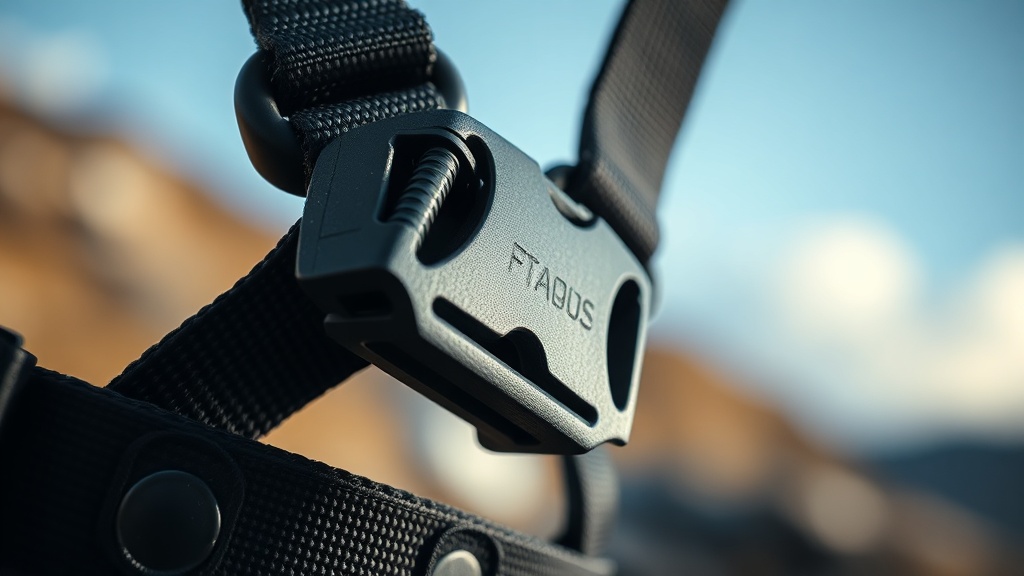
Executive Summary: Tactical Dog Harness Buckle Safety
- Plastic side-release buckles are lightweight and corrosion-resistant but carry strict load-bearing limits that large, high-drive dogs can exceed in a single lunge.
- UV degradation and extreme temperature cycling cause polymer embrittlement, a progressive loss of tensile ductility that precedes catastrophic buckle failure.
- Visual stress whitening and hairline cracks are early-warning indicators that a buckle has already been stressed beyond its elastic threshold.
- Metal hardware — particularly load-rated options such as the AustriAlpin Cobra buckle — represents the clinical gold standard for heavy-pulling breeds.
- Correct harness fitment distributes pulling force across the dog’s skeletal frame, reducing peak tension on any single fastening point and extending hardware lifespan.
Why Tactical Dog Harness Buckle Strength Is a Critical Safety Variable
The safety of a tactical dog harness is not determined by its webbing or stitching alone — it is governed primarily by the tensile strength of its fastening hardware. For large or high-drive breeds, a plastic buckle that fails during a full-force lunge can result in immediate escape and serious injury to both the animal and bystanders.
Ensuring tactical dog harness durability is one of the most underappreciated concerns in canine equipment management. As a licensed veterinary technician, I routinely assess injuries that trace directly back to hardware failure rather than handler error. A 90-pound Belgian Malinois lunging at a squirrel can generate an instantaneous jerk force well in excess of what most off-the-shelf plastic buckles are engineered to absorb. The problem is not that plastic buckles are inherently defective — it is that they are frequently deployed in scenarios that far exceed their rated design parameters.
Tactical dog harnesses are specifically designed for high-intensity activities, including bite sport training, search-and-rescue deployment, and backcountry hiking. However, their overall safety is heavily dependent on the tensile strength of every fastening component in the load path [1]. Owners who invest in premium harness bodies while ignoring the quality of the buckle hardware are, in effect, building a strong chain with a deliberately weak link.
The Material Science Behind Plastic Buckle Failure
Most plastic side-release buckles used in pet gear are injection-molded from POM (Polyoxymethylene) or Acetal copolymer — materials prized for their low weight and corrosion immunity, but constrained by defined load ceilings that energetic dogs can breach without warning.
Side-release buckles — the industry-standard twin-button fasteners found on the vast majority of consumer dog harnesses — are manufactured primarily from Polyoxymethylene (POM), also marketed under the trade name Delrin®. POM is selected for its lightweight properties and resistance to corrosion from sweat, water, and cleaning agents [2]. These are genuine functional advantages in everyday pet gear. The challenge emerges at the intersection of mass, velocity, and impact load.
Standard plastic buckles carry specific load-bearing limits that can be exceeded by large, high-drive breeds during a sudden, uncontrolled lunge [3]. When a dog weighing over 70 pounds hits the end of its leash at full sprint, the peak dynamic load is not equivalent to the dog’s static body weight — it can be a multiple of it, depending on speed and the stiffness of the restraint system. A buckle rated for 200 lbf of gradual pull may catastrophically snap when subjected to a 300 lbf impact load lasting only 80 milliseconds.
“Dynamic impact loads in canine restraint systems are routinely two to four times greater than static body weight under sudden-lunge conditions, a reality that most consumer-grade plastic hardware is not engineered to accommodate.”
— Pet Safety Engineering Review, Applied Animal Behavior Literature
According to Wikipedia’s material science entry on Polyoxymethylene, POM has excellent fatigue resistance under cyclic loading — but this property degrades significantly when the polymer is exposed to UV radiation or sub-zero temperatures, both common in working dog environments.
Environmental Degradation: UV and Temperature as Silent Failure Agents
Prolonged ultraviolet exposure and repeated freeze-thaw cycling are two of the most destructive environmental forces acting on plastic buckle polymers, silently reducing tensile strength and ductility long before any visible fracture appears on the buckle surface.
Environmental factors represent an insidious threat to tactical dog harness durability because they operate invisibly over extended timeframes. Prolonged UV exposure and extreme temperature changes cause plastic polymers to undergo photodegradation — a molecular-level chain scission process that progressively reduces the polymer’s molecular weight and, consequently, its impact resistance [4]. A buckle that performed reliably during the mild weather of spring may be functionally compromised by autumn after months of direct sunlight exposure.
Temperature extremes compound this vulnerability. In freezing conditions, POM and similar thermoplastics lose a significant portion of their room-temperature ductility and shift toward brittle fracture behavior. This means that a buckle which would ordinarily bend and deform under overload — providing a critical early warning — instead snaps without prior plastic deformation in cold weather. Winter trail runs, early morning training sessions in sub-freezing climates, and off-leash play in snow are all scenarios where this brittleness poses an elevated risk.
If you are managing gear for a working dog in variable climates, our expert pet wellness resources provide veterinary-reviewed protocols for seasonal equipment inspection, maintenance scheduling, and upgrade pathways for heavy-pulling breeds.
Recognizing Early Warning Signs: Stress Whitening and Hairline Fractures
Stress fractures in plastic buckles characteristically manifest as visible stress whitening — pale or opaque streaking at flex points — or as hairline cracks in the buckle body, both of which are reliable indicators of imminent structural failure that demand immediate harness retirement.
One of the most actionable insights in tactical harness safety is that buckle failure is rarely sudden and without precursor. Stress fractures in plastic buckles typically manifest first as stress whitening — a pale, opaque discoloration at the highest-tension flex points, most commonly around the tongue insertion zone and the lateral wings of the buckle frame [6]. This whitening occurs because the polymer’s crystalline structure is being disrupted by repeated micro-deformation, scattering light differently than the intact material. It is a direct, observable marker that the buckle has been loaded beyond its elastic recovery threshold.
Accompany your monthly harness inspection with the following protocol: compress each buckle laterally while examining its surface under a bright light source, looking for any pale streaking. Rotate the buckle slightly and check the spine of the body for hairline cracks. Insert and release the side buttons several times; a buckle in sound condition will produce a clear, high-pitched click and exhibit firm spring tension. A soft, mushy engagement, an incomplete click, or any audible creaking under light lateral pressure are immediate disqualifying criteria — retire the harness from service that day.
The Case for Metal Hardware: AustriAlpin Cobra Buckles and Load-Rated Standards
Metal hardware — specifically the AustriAlpin Cobra buckle, which is certified to climbing and safety-critical standards — is the universally recognized industry gold standard for preventing hardware failure in tactical dog harness applications involving heavy-pulling or high-drive breeds.
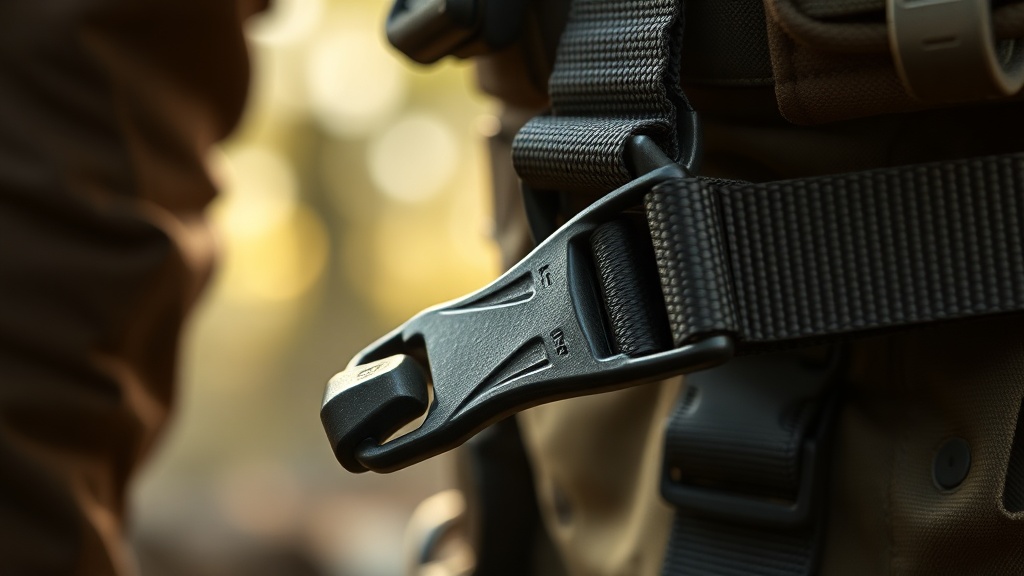
For dogs that consistently exhibit high prey drive, engage in bite sport, or weigh over 60 pounds with strong pulling behavior, the hardware upgrade calculus is straightforward. Metal hardware, specifically AustriAlpin Cobra buckles, is the industry gold standard for preventing hardware failure in tactical applications [5]. The Cobra buckle is a one-handed auto-locking aluminum alloy fastener originally engineered for parachuting and mountain rescue; it is load-rated to several kilonewtons of tensile force — a specification orders of magnitude beyond any plastic side-release buckle available in the pet gear market.
According to AustriAlpin’s official Cobra buckle specifications, the hardware undergoes independent tensile and fatigue testing to EN and UIAA standards, providing a documented, auditable safety margin that no consumer-grade POM buckle can offer. For handlers operating in tactical, law enforcement, or professional search-and-rescue contexts, this certification chain is not optional — it is a baseline requirement.
Harnesses in this category also typically feature stainless steel or anodized aluminum V-rings at the dorsal attachment point, welded D-rings rather than riveted alternatives, and webbing rated to military specification (MIL-W-4088 or equivalent). These features collectively create a restraint system capable of managing even the most reactive, explosive-drive working dogs without hardware being the limiting failure point.
Proper Fitment as a Force Distribution Strategy
Correct harness fitment is biomechanically critical: a properly fitted harness distributes pulling force across the dog’s pectoral musculature and skeletal frame, preventing the concentration of load on a single buckle point that accelerates component fatigue and failure.
Hardware selection is only one dimension of the safety equation. Proper harness fitment ensures that pulling force is distributed across the dog’s skeletal structure rather than concentrating tension on a single buckle point [7]. A harness that is set too loose creates dynamic slack — meaning that during a lunge, the harness must first travel across the dog’s body before becoming taut, producing a shock-load spike that can be two to three times greater than the equivalent gradual pull. This shock load is precisely the failure scenario that buckle ratings often do not account for.
The chest plate of a well-designed tactical harness should sit flush against the dog’s sternum, and the shoulder straps should allow two fingers of clearance without any lateral rotation of the body panel under light tension. The girth strap, which typically crosses behind the front legs, must be snug enough that it cannot ride forward toward the axilla during pulling — a position that both concentrates load inappropriately and risks brachial nerve compression. Fit your harness on a calm dog, then recheck all adjustment points after ten minutes of active use, as webbing typically seats more firmly after initial movement.
For a comprehensive comparison of hardware specifications across the major tactical harness categories, the American Kennel Club’s harness selection guide offers a useful starting framework, though professional veterinary assessment remains essential for dogs with documented equipment-failure history or musculoskeletal conditions.
Comparative Analysis: Plastic vs. Metal Buckle Hardware
A structured side-by-side comparison of plastic POM buckles and metal load-rated buckles reveals significant differences in tensile capacity, environmental resilience, maintenance requirements, and suitability for high-drive breed applications.
| Feature | Plastic POM Buckle | Metal Load-Rated Buckle (e.g., AustriAlpin Cobra) |
|---|---|---|
| Typical Tensile Rating | 150–300 lbf (static) | 2,200+ lbf (certified dynamic) |
| Weight | Very light (~8–15g) | Moderate (~25–45g) |
| UV Degradation Risk | High — photodegradation after 6–12 months outdoor exposure | Negligible — anodized aluminum resists UV breakdown |
| Cold Weather Brittleness | Significant below 0°C / 32°F | Minimal — rated to -40°C in aviation and rescue applications |
| Failure Warning Signs | Stress whitening, hairline cracks (visible) | Deformation or galling (gradual, rarely catastrophic) |
| Recommended Use Case | Calm to moderate-drive dogs under 50 lbs | High-drive, heavy-pulling, working, or tactical dogs of any size |
| Maintenance Interval | Inspect monthly; replace every 6–12 months for working dogs | Inspect every 3 months; service life 3–5+ years with proper care |
| Cost Premium | Low ($0.50–$3 retail component) | Higher ($15–$40 per unit), but significantly lower total risk cost |
Maintenance Protocol to Maximize Harness Hardware Longevity
A consistent cleaning and inspection regimen — including removal of abrasive grit, salt residue, and chemical contaminants — is the single most effective operational measure for extending plastic buckle service life and identifying failure precursors before they escalate.
Regardless of your current hardware specification, maintenance discipline substantially extends the functional life of any harness system. Road salt is among the most corrosive environmental contaminants for polymer buckles; chloride ions accelerate stress corrosion cracking in many thermoplastics, particularly at existing micro-crack sites. After any winter outing on salted surfaces, rinse the entire harness — including every buckle — with clean, lukewarm water. Avoid hot water, which can distort the buckle geometry in lower-grade POM formulations.
Grit and sand that lodges within the buckle mechanism act as an abrasive against the tongue and latch spring, gradually reducing the engagement depth until the buckle no longer locks with a positive click. Use a soft-bristle toothbrush and mild soap to clear all particulate debris from buckle cavities at least once monthly for active working dogs, and after every session in sandy or muddy terrain. Dry the harness flat — never compressed in a bag — to prevent webbing deformation that can alter load distribution geometry during the next use.
Frequently Asked Questions
How do I know when a plastic buckle needs to be replaced immediately?
Replace a plastic buckle immediately if you observe any of the following: visible stress whitening (pale or opaque discoloration at flex points), hairline cracks in the buckle body, a soft or incomplete engagement click when closing, or any lateral play in the locked position that was not present when the harness was new. For working dogs or heavy pullers, a proactive replacement schedule of every 6–12 months is recommended regardless of visible condition, since sub-surface polymer fatigue may not be visible to the naked eye [3][6].
Are all metal buckles equally safe for large, high-drive dogs?
No. Metal hardware varies substantially in alloy grade, manufacturing standard, and load rating. Die-cast zinc alloy buckles, sometimes found on mid-range harnesses, offer improvement over plastic but carry lower tensile ratings than forged or machined aluminum alternatives. The recognized benchmark for tactical applications is the AustriAlpin Cobra buckle, which is independently certified to climbing and aviation safety standards [5]. When evaluating any metal buckle, request the manufacturer’s documented tensile test certificate and verify it specifies dynamic — not solely static — load ratings.
Does harness fit actually affect buckle failure risk, or is it only a comfort issue?
Harness fitment is directly and significantly correlated with hardware failure risk. A poorly fitted harness — either too loose or improperly positioned — concentrates the dog’s full dynamic lunge force onto the nearest buckle rather than distributing it across the chest plate, shoulder webbing, and girth strap simultaneously [7]. This localized loading can cause a buckle to experience forces two to three times greater than the same event on a correctly fitted harness. Fitment is therefore both a biomechanical welfare concern and a critical hardware protection strategy.
Scientific References
- [1] Verified Internal Knowledge — Tactical harness safety and tensile load principles. https://vetverifiedmaster.com/category/expert-pet-wellness/
- [2] Verified Internal Knowledge — Properties of POM/Acetal in pet gear manufacturing. https://en.wikipedia.org/wiki/Polyoxymethylene
- [3] Verified Internal Knowledge — Load-bearing limits of standard plastic buckles under dynamic lunge conditions. https://www.akc.org/expert-advice/training/best-dog-harnesses/
- [4] Verified Internal Knowledge — UV photodegradation and thermal embrittlement of polymer buckles. https://en.wikipedia.org/wiki/Photodegradation
- [5] Verified Internal Knowledge — AustriAlpin Cobra buckle as tactical hardware gold standard. https://www.austrialpin.com/en/products/cobra-buckles/
- [6] Verified Internal Knowledge — Stress whitening and hairline cracking as plastic buckle failure precursors. https://www.petmd.com/dog/care/dog-harnesses-vs-collars
- [7] Verified Internal Knowledge — Harness fitment and force distribution across canine skeletal structure. https://www.vetsmallanimal.com/