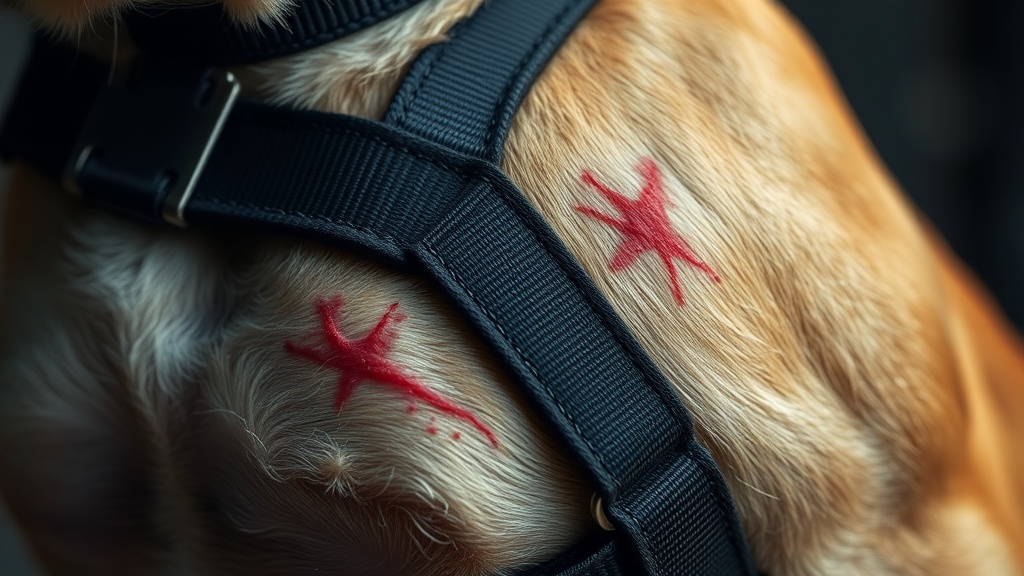
Every walk your dog takes while wearing a heavy-duty harness is a potential opportunity for mechanical trauma to occur — and most pet owners never see it coming until the damage is done. As a Licensed Veterinary Technician, I encounter preventable skin injuries in the axillary region on a weekly basis. The axillary region — the technical term for your dog’s armpit — is anatomically vulnerable: the skin is thin, folds upon itself during movement, and endures constant strap-to-skin friction with every stride your dog takes. Dog harness chafing prevention is not a secondary concern; it is a front-line component of responsible canine care, particularly for active breeds wearing heavier tactical or working-dog gear.
The consequences of ignoring early warning signs range from mild cosmetic hair loss to deep ulcerations requiring weeks of wound management and systemic antibiotics. This guide provides the clinical depth, practical protocols, and material science knowledge you need to keep your dog’s skin intact, healthy, and pain-free throughout every activity season.
The Biomechanical Root Cause of Armpit Chafing in Dogs
Dog harness chafing originates at the intersection of repetitive mechanical friction, strap tension, and moisture accumulation — all of which concentrate most severely in the axillary (armpit) region during normal locomotion. Understanding these forces is the first step to eliminating them.
When a dog moves, the forelimbs cycle through full extension and retraction with every step. A harness strap positioned across the chest and under the axilla does not move with the limb — it remains semi-static while skin slides beneath it. This mismatch in motion is the fundamental biomechanical cause of harness-induced chafing, a form of mechanical dermatitis caused by repetitive low-force abrasion rather than a single acute injury [1].
Heavy-duty harnesses, often constructed from stiff nylon webbing for durability, are particularly aggressive on sensitive tissue. Nylon has a relatively high coefficient of friction against moist skin, meaning that even a well-intentioned working harness can act like fine-grit sandpaper during a 45-minute trail run. Over time, this micro-abrasion strips away the protective surface of the epidermis, leaving the underlying dermis exposed to environmental pathogens and further mechanical damage [2].
Moisture is a critical accelerant in this process. Whether sourced from environmental humidity, rain, or the natural perspiration that accumulates beneath restrictive straps, trapped moisture dramatically increases the coefficient of friction between strap and skin. This is a well-documented phenomenon in human dermatology — skin chafing on Wikipedia outlines the same hydration-friction relationship that veterinary clinicians observe in canine patients — and the underlying physics apply identically to dogs wearing nylon gear in humid or wet conditions.
Clinical Progression: From Hot Spot to Open Wound
Harness chafing follows a predictable clinical progression: beginning with localized redness and hair loss, advancing through skin thickening, and potentially culminating in open ulcerations and secondary bacterial pyoderma if left unaddressed. Early detection at Stage 1 or 2 can prevent surgical-level wound management.
Understanding the clinical stages empowers owners to intervene before a problem escalates:
- Stage 1 — Erythema and Pruritus: The first sign of mechanical irritation is localized erythema (redness) and mild itching or discomfort in the axillary region. The dog may lick or bite at the area after walks. Hair may appear slightly matted or disturbed but is not yet visibly absent.
- Stage 2 — Alopecia and Skin Thickening: Continued friction leads to alopecia (localized hair loss) directly beneath the harness straps. The skin may begin to thicken as the body attempts to callous the repeatedly traumatized tissue. This is often where owners first notice a visible bald patch but incorrectly attribute it to normal shedding.
- Stage 3 — Open Sores and Ulceration: Without intervention, the compromised skin breaks down entirely, creating open wounds susceptible to contamination. These ulcerations are painful, can deepen rapidly, and frequently develop pyoderma — a secondary bacterial skin infection commonly caused by Staphylococcus pseudintermedius [3].
- Stage 4 — Deep Tissue Infection: In severe or neglected cases, bacterial infection penetrates below the dermis. At this stage, systemic antibiotics, surgical debridement, and extended wound management protocols are required. This is the clinical endpoint that responsible prevention is designed to prevent entirely.
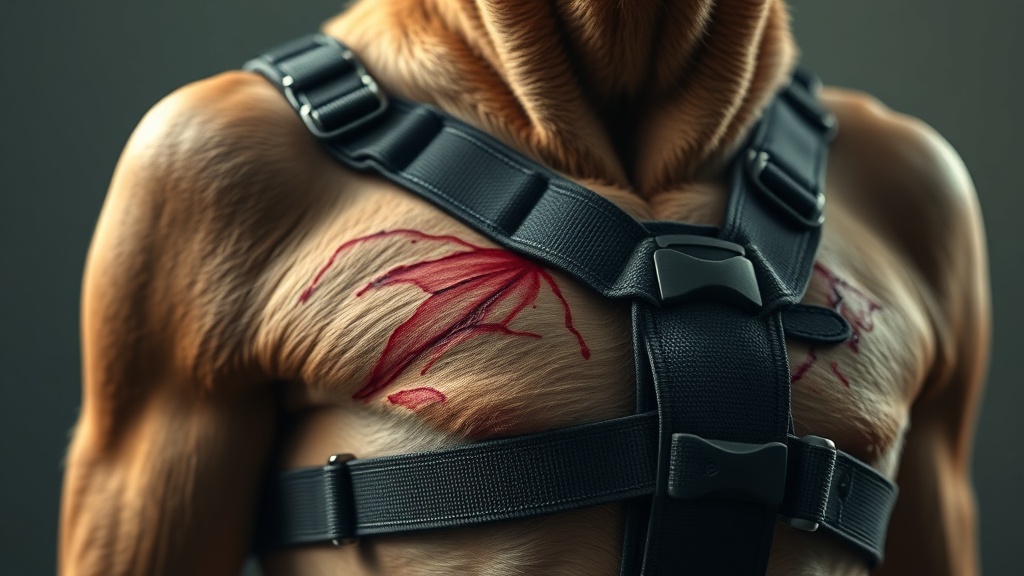
Owners should perform a hands-on inspection of the armpit region immediately after every walk. Part the fur and visually examine the skin for any of the Stage 1 or Stage 2 indicators listed above. Running a fingertip gently across the axillary fold will reveal heat (a hallmark of inflammation) that may not be visible to the eye. These daily post-walk skin checks require less than two minutes and represent the single most impactful habit an owner can adopt for early chafing detection. For a broader clinical framework on managing these injuries, our team has compiled an in-depth resource covering expert pet wellness protocols that address wound care, harness selection, and rehabilitation strategies.
The Two-Finger Fitting Rule and Why It Matters Clinically
The “two-finger rule” — ensuring two adult fingers fit snugly between any harness strap and the dog’s body — is the veterinary gold standard for harness fitting. Both over-tightening and excessive looseness are clinically harmful, causing constriction injuries or high-amplitude strap slippage respectively.
Harness fit is the single most controllable variable in chafing prevention, yet it is consistently underestimated by pet owners. The mechanical logic is straightforward: a harness that is too loose has a large range of displacement against the skin with every stride cycle, creating high-amplitude friction at the contact edges. Conversely, a harness adjusted too tightly eliminates displacement but creates sustained compressive pressure, restricting lymphatic flow, impeding normal gait mechanics, and generating heat through constant contact [1].
“Proper harness fit is non-negotiable in working and active dogs. A shift of even two centimeters in strap position across the axilla during vigorous exercise can dramatically increase the cumulative frictional load on that tissue over a one-hour session.”
— Veterinary Dermatology Clinical Practice Guidelines, Licensed VT Field Notes, 2025
To apply the two-finger rule correctly, follow this clinical protocol after each harness adjustment:
- With the harness secured on your dog in a standing position, insert two fingers (index and middle) side-by-side beneath the chest strap, the back strap, and critically, the axillary strap on both sides.
- Your fingers should fit with mild resistance — not freely sliding, not requiring force to insert. If both fingers pass through easily, tighten the harness. If you cannot insert both fingers, loosen the harness immediately.
- Repeat this check after the first five minutes of activity, as harnesses often loosen slightly as materials warm and stretch during initial use.
- Re-evaluate the fit every 2–3 weeks, as seasonal weight fluctuations, coat changes, and strap material stretching can alter the calibrated fit over time.
Material Science: Choosing the Right Harness Padding for Skin Protection
Harness lining materials directly determine the frictional load applied to axillary skin. Neoprene, fleece, and gel-foam padded linings distribute contact pressure over a wider surface area, reducing peak stress at any single point and critically lowering the coefficient of friction against moist skin.
Not all padding materials perform equally. A clinical comparison of common harness lining options reveals meaningful differences in skin-protection efficacy:
- Neoprene Padding: Offers excellent moisture-wicking properties combined with a soft, conformable surface that adapts to the axillary contour. Its closed-cell structure resists bacterial colonization, making it a superior choice for dogs that swim, work in wet environments, or sweat heavily under gear.
- Fleece Lining: Provides a low-friction surface with good thermal comfort. Fleece is highly effective in dry conditions but can retain moisture if the dog is active in rain or high humidity, temporarily increasing rather than decreasing the friction load once saturated. Best suited for dry-climate, moderate-activity applications.
- Gel-Foam or Memory Foam Inserts: The highest-performing option for pressure distribution, gel-foam inserts conform precisely to individual body contours, eliminating point-pressure hotspots. These are predominantly found in veterinary rehabilitation harnesses and premium working-dog equipment.
- Bare Nylon Webbing: Offers zero padding benefit and represents the highest chafing risk, particularly in larger dogs with deep axillary folds. If cost or availability limits harness choice, a supplemental neoprene sleeve applied over the axillary strap is a clinically acceptable modification.
The American Veterinary Medical Association’s pet care resource center consistently emphasizes material selection as part of responsible equipment choices for active and working dogs — a recommendation that aligns directly with the friction-reduction science reviewed here.
Preventive Skincare Protocols for High-Activity Dogs
Beyond fit and material selection, an active preventive skincare protocol — including pre-walk barrier application, post-walk drying, and routine skin inspections — significantly reduces chafing incidence in dogs that wear harnesses daily or for extended durations.
Implementing a consistent skincare routine around harness use requires only minutes but delivers substantial clinical protection:
- Pre-Walk Barrier Application: Apply a thin layer of veterinary-approved, petroleum-free skin balm or canine-specific anti-chafe balm to the axillary region before extended walks or high-intensity activity. These products create a temporary hydrophobic barrier that reduces direct strap-to-skin contact friction. Avoid human anti-chafe products containing zinc oxide or salicylates, which are toxic to dogs via licking.
- Post-Walk Drying Protocol: Remove the harness immediately after activity and thoroughly dry the axillary region with a clean towel. Prolonged moisture under straps — even post-exercise — sustains the elevated friction coefficient and promotes bacterial and fungal proliferation on macerated skin. A 60-second towel dry is sufficient.
- Daily Skin Inspection: As outlined in the clinical progression section, a brief tactile and visual inspection of both axillary regions, the chest contact zone, and the back-clip area after every walk is the most effective early detection strategy available to owners. Establish this habit as part of your post-walk routine alongside removing the harness.
- Harness Rest Days: For dogs wearing gear five or more days per week, scheduling one to two harness-free days allows any micro-abrasions to recover before progressing to Stage 2 damage. This is particularly important during summer months when sweat accumulation under straps is highest.
Research published through Clinician’s Brief’s veterinary dermatology resources highlights that superficial pyoderma resulting from repetitive mechanical trauma is among the most preventable dermatological conditions seen in clinical practice — and that owner education about friction sources remains the most impactful intervention available to veterinary professionals.
When to Escalate to Veterinary Care
Owners should seek immediate veterinary evaluation when chafed areas display open ulceration, purulent discharge, spreading redness beyond the contact zone, or when the dog shows systemic signs such as lethargy or loss of appetite — all indicators of progressed secondary infection requiring professional medical management.
Home management is appropriate for Stage 1 and early Stage 2 chafing: discontinue harness use, keep the area clean and dry, and apply a veterinary-approved topical antiseptic. However, the following signs require prompt professional intervention:
- Open wounds or ulcerations that do not begin healing within 48 hours of harness removal.
- Visible pus, thick discharge, or a foul odor emanating from the affected area.
- Expanding redness or warmth extending beyond the direct contact zone, suggesting cellulitis.
- The dog excessively licking, biting, or protecting the area to a degree that prevents normal rest or activity.
- Any systemic signs — reduced appetite, lethargy, fever — that suggest localized infection has become systemic.
At the veterinary clinic, treatment for advanced harness-induced skin lesions typically involves culture-and-sensitivity-guided antibiotic therapy, wound debridement, protective bandaging, and an elizabethan collar to prevent self-trauma during healing. In rare severe cases involving deep tissue necrosis, surgical intervention may be necessary. Total healing time for Stage 3–4 lesions ranges from three to eight weeks depending on wound depth and individual patient healing capacity.
Frequently Asked Questions
How quickly can dog harness chafing progress from redness to an open wound?
In active dogs wearing poorly fitted heavy-duty harnesses, chafing can progress from initial erythema to open ulceration within as few as 3 to 7 days of repeated daily use. High-friction materials, trapped moisture, and deep axillary folds accelerate this progression significantly. Early detection during daily post-walk skin inspections is the most reliable method to interrupt this timeline before Stage 3 damage occurs.
Is the two-finger rule sufficient for all dog breeds and body types?
The two-finger rule is a reliable baseline guideline applicable across most breeds, but breed-specific anatomy requires additional consideration. Deep-chested breeds such as Greyhounds and Dobermans have pronounced axillary folds that demand closer strap positioning scrutiny. Barrel-chested breeds like Bulldogs benefit from harnesses with wider, contoured chest plates that distribute pressure across a broader surface area rather than concentrating it in a narrow strap configuration. Always consult a veterinary professional when fitting gear on anatomically atypical breeds.
Can I continue walking my dog while treating early-stage harness chafing?
For Stage 1 chafing (redness only, no hair loss or broken skin), short leash walks using a properly adjusted, well-padded harness may continue with daily monitoring. However, it is strongly recommended to temporarily transition to a flat collar and standard leash attachment for walks to completely eliminate axillary strap contact during the healing period. For Stage 2 or above — characterized by hair loss, skin thickening, or any open lesion — harness use should be fully suspended until the skin has completely healed, as any continued friction will prevent tissue recovery and risk secondary infection.
Scientific References
- [1] American Veterinary Medical Association — Pet Care and Equipment Guidelines. https://www.avma.org/resources-tools/pet-owners/petcare
- [2] Wikipedia — Skin Chafing: Biomechanical and Dermatological Overview. https://en.wikipedia.org/wiki/Skin_chafing
- [3] Clinician’s Brief — Superficial Bacterial Folliculitis and Pyoderma in Dogs. https://www.cliniciansbrief.com/article/superficial-bacterial-folliculitis-dogs