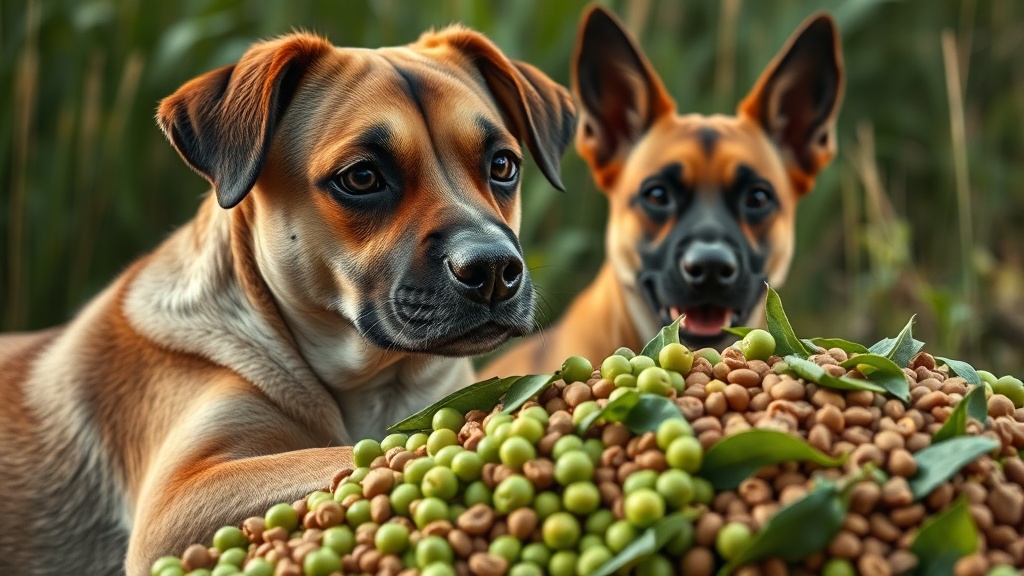
Peas and Lentils Blocking Taurine Absorption in Giant Dogs: What Every Large-Breed Owner Needs to Know
The first time I encountered this problem was with a 4-year-old Great Dane named Brutus who came into our clinic with exercise intolerance and a heart that looked — on echo — far older than his years. His owner had been feeding him a “grain-free” diet loaded with peas and lentils for two years, thinking she was doing everything right. What she didn’t know was that those well-intentioned ingredients may have been quietly undermining his taurine status the entire time.
I’ve worked alongside cardiologists and internal medicine specialists on dozens of cases like Brutus, and the pattern keeps repeating. Giant breeds — Great Danes, Saint Bernards, Irish Wolfhounds, Mastiffs — are presenting with dilated cardiomyopathy (DCM) at rates that correlate uncomfortably well with the rise of legume-heavy, grain-free formulas. The question of peas and lentils blocking taurine absorption in giant dogs isn’t just academic anymore. It’s a clinical reality I see in practice.
Why Taurine Matters So Much — Especially in Giant Breeds
Taurine is a sulfur-containing amino acid critical for cardiac muscle function, retinal health, and neurological stability. Unlike cats, dogs can synthesize it — but giant breeds may not synthesize it fast enough, especially under metabolic or dietary stress.
Most people don’t realize that taurine deficiency in dogs isn’t the same across all breeds. Cats are obligate taurine consumers because they cannot synthesize it at all — that’s a well-known species difference. Dogs are supposed to make their own taurine from methionine and cysteine. But here’s the wrinkle: giant breeds have higher cardiac demands, slower metabolic turnover, and potentially lower baseline taurine synthesis rates. When you layer a problematic diet on top of that, the margin for error essentially disappears.
The heart muscle — specifically the myocardium — relies on taurine for calcium regulation, membrane stabilization, and protection against oxidative stress. Without adequate taurine, cardiomyocytes become vulnerable. In large dogs with already-stretched cardiac tissue, that vulnerability becomes a pathway to dilated cardiomyopathy.
This isn’t a new concept, but it became urgent when the FDA launched its investigation into DCM and grain-free diets in 2018, naming peas, lentils, and legume seeds as ingredients of concern in hundreds of reported cases.
How Peas and Lentils Actually Interfere With Taurine
Peas and lentils block taurine absorption through multiple overlapping mechanisms — they’re not just “empty” substitutes for grain; they actively disrupt the biochemical pathways dogs use to maintain taurine status.
The mechanism isn’t a single smoking gun. After looking at dozens of cases and reviewing the peer-reviewed literature, I can tell you it’s a multi-pathway problem. First, peas and lentils are high in dietary fiber and certain antinutritional factors — including phytates and trypsin inhibitors — that reduce protein digestibility. Less digestible protein means less available methionine and cysteine, the precursor amino acids dogs use to synthesize taurine.
Second, legumes alter gut microbiome composition. Fermentation of legume fiber produces compounds that may upregulate bile acid excretion. Taurine is used by the liver to conjugate bile acids — so if bile acid output increases without a corresponding dietary taurine supply, the body’s taurine pool gets depleted. It’s essentially a slow drain on a tank that’s not being refilled.
Third — and this is the part that surprises most owners — processing matters. Extruded kibble at high temperatures can degrade cysteine, reducing precursor availability even further. So a diet that already uses legumes as primary protein sources compounds the problem through the manufacturing process itself.

The clients who struggle with this the most are those feeding boutique or small-batch brands where peas, lentil flour, chickpeas, or pea protein appear in the first five ingredients. They’ve often done their research, care deeply about quality, and genuinely believe grain-free equals healthier. The heartbreak is real when we explain what may have been happening.
Giant Breeds Are Not the Same as Medium Dogs
Species differences matter, but so do breed-size differences within dogs. Giant breeds have unique cardiac physiology that makes taurine depletion especially dangerous compared to smaller dogs on the same diet.
This depends on whether you have a true giant breed versus a large breed. If you’re feeding a dog over 100 pounds — Great Dane, Newfoundland, Saint Bernard, Great Pyrenees — the risk profile is significantly higher than if you’re feeding a 60-pound Labrador. If you have a medium breed in good health with no cardiac history, the risk still exists but the urgency is lower. Giant breeds warrant proactive screening, period.
Giant breeds have hearts that are proportionally large and physiologically stressed just by the demands of pumping blood through a massive body. The myocardium in a Great Dane is already working harder than in smaller dogs. Add in a genetic predisposition to DCM (which Irish Wolfhounds and Dobermans, for example, carry), and a diet that slowly drains taurine reserves, and you have a dangerous combination.
The published research from UC Davis on taurine-deficient DCM showed that dietary changes and taurine supplementation led to partial or full recovery in some dogs — but only when caught early enough. Late-stage DCM is largely irreversible.
Signs to Watch For in Your Giant-Breed Dog
Taurine-related DCM develops gradually and silently. By the time symptoms appear, cardiac remodeling may already be significant.
I want every giant-breed owner reading this to know these warning signs because early detection genuinely saves lives:
- Exercise intolerance — tiring faster than usual on walks, reluctance to play
- Coughing, especially at night — this can indicate fluid accumulation around the lungs
- Abdominal distension — fluid in the abdomen (ascites) is a late but visible sign
- Labored or rapid breathing at rest
- Weakness or fainting episodes (syncope)
- Weight loss without change in appetite
- Blue or gray tinge to gums (cyanosis) — this is an emergency
If your dog shows any combination of these signs, especially coughing with exercise intolerance in a grain-free-fed giant breed, call your vet immediately.
When to see a vet instead of waiting: If your giant-breed dog has been on a legume-heavy grain-free diet for more than six months, schedule a cardiac screening even with no symptoms. An echocardiogram and whole blood taurine level are the two tests that matter most. Don’t wait for symptoms to justify the visit.
What to Feed Instead — and How to Transition Safely
Switching away from legume-heavy diets is the most actionable step, but how you do it matters as much as what you switch to — especially for a dog with a sensitive digestive system or suspected cardiac compromise.
The turning point is usually when owners ask: “Okay, so what do I feed?” The answer depends on your dog’s current health status versus their baseline risk. If your dog has already been diagnosed with low taurine or DCM, work directly with a board-certified veterinary nutritionist and cardiologist — do not make dietary changes alone. If your dog is asymptomatic but currently on a legume-heavy diet, a transition to a diet with named meat as the first ingredient, whole grains (brown rice, oats, barley), and without peas or lentils in the top five ingredients is a reasonable proactive step.
Look for diets that list ingredients like lamb, chicken, beef, or salmon first. Diets formulated to meet AAFCO standards through feeding trials — not just nutrient analysis — offer better confidence in bioavailability. For expert, veterinary-verified pet wellness guidance on breed-specific nutrition, always cross-reference with credentialed sources rather than marketing claims on the bag.
Taurine supplementation may be appropriate as a bridge during transition, typically dosed at 500–1000mg twice daily for large breeds, but this should be discussed with your veterinarian first. Supplementing without addressing the underlying dietary cause is like patching a leaky pipe without turning off the water.
The WSAVA’s guidelines on selecting pet food remain one of the most evidence-based frameworks for evaluating commercial diets and should be required reading for any giant-breed owner.
Summary Table: Legume-Heavy vs. Balanced Giant-Breed Diets
Here’s a side-by-side breakdown of everything we covered, compressed into one reference table for owners and caregivers.
| Factor | Legume-Heavy Grain-Free Diet | Balanced Meat-Forward Diet |
|---|---|---|
| Taurine Precursor Availability | Low (reduced methionine/cysteine digestibility) | High (animal protein provides direct precursors) |
| DCM Risk in Giant Breeds | Elevated — especially with prolonged feeding | Lower when whole grains and quality protein included |
| Bile Acid Impact | Increased excretion, depletes taurine pool | Normal bile acid cycling |
| Fiber Type | High fermentable fiber from legumes | Moderate, varied fiber sources |
| AAFCO Feeding Trial Compliance | Often formulated by analysis only | More commonly feeding-trial validated |
| Recovery Potential if DCM Caught Early | Possible if taurine addressed promptly | Reduced risk of needing recovery |
Your Next Steps
- Check your current dog food label today. If peas, lentils, chickpeas, pea protein, or lentil flour appear in the first five ingredients and your dog is a giant breed, contact your vet to discuss transitioning to a meat-forward, grain-inclusive formula.
- Schedule a proactive cardiac screening. Ask your vet for a whole blood taurine level and an echocardiogram if your giant-breed dog has been on a grain-free diet for six months or more — regardless of whether symptoms are present.
- Do not supplement taurine without veterinary guidance. If your vet confirms low taurine or DCM, ask for a referral to a board-certified veterinary cardiologist and nutritionist before making any dietary or supplement changes.
Frequently Asked Questions
Can small dogs also be affected by peas and lentils blocking taurine absorption?
Yes, small dogs can be affected, but the risk is significantly lower than in giant breeds. Cocker Spaniels and Golden Retrievers have shown some taurine-related DCM risk regardless of size, suggesting breed genetics play a role beyond just body weight. Giant breeds remain the highest-priority concern due to their cardiac physiology and breed-level DCM predisposition.
How quickly can taurine levels drop on a legume-heavy diet?
This depends on the individual dog’s baseline synthesis rate, dietary methionine/cysteine content, and activity level. Some dogs show depleted whole blood taurine within 12 months on a problematic diet. Others may take longer. Giant breeds appear to reach concerning levels faster due to higher cardiac demand and potentially lower endogenous synthesis efficiency.
If I switch my dog’s diet now, will taurine levels recover on their own?
Often yes, especially if DCM hasn’t progressed significantly. Published case series show partial to full cardiac recovery in dogs switched to taurine-adequate diets, sometimes with supplementation. Recovery time varies — typically 3–6 months of dietary correction with follow-up echocardiography to assess improvement. Early intervention is everything here.
References
- U.S. Food and Drug Administration. (2019). FDA Investigation into Potential Link Between Certain Diets and Canine Dilated Cardiomyopathy. fda.gov
- Kaplan, J.L., et al. (2018). Taurine Deficiency and Dilated Cardiomyopathy in Golden Retrievers Fed Commercial Diets. PLoS ONE / PMC. ncbi.nlm.nih.gov
- World Small Animal Veterinary Association (WSAVA). (2019). Selecting the Right Food for Your Pet. wsava.org
- Freeman, L.M., et al. (2018). Diet-Associated Dilated Cardiomyopathy in Dogs: What Do We Know? Journal of the American Veterinary Medical Association.