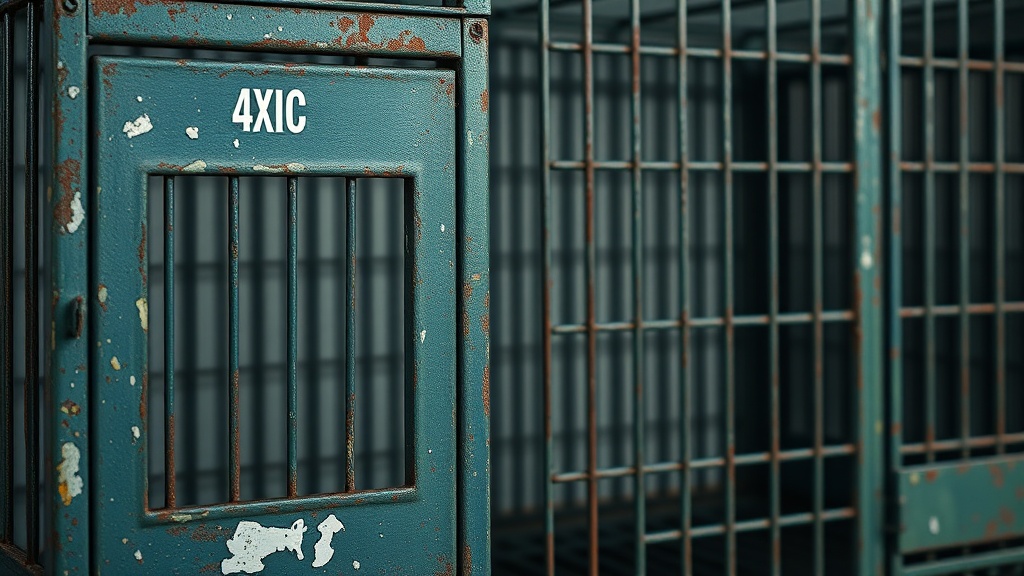
Toxic Paint Chipping on Heavy Duty Steel Dog Crates: What Every Dog Owner Must Know Before It’s Too Late
It’s a Tuesday morning. You walk into the living room and notice your dog is chewing at the corner of that heavy-duty steel crate you spent $180 on last year. You look closer — small flakes of paint are scattered across the crate floor. Some are missing entirely. Your dog’s mouth has traces of gray-green residue. Your stomach drops. This is the exact scenario I’ve seen play out in our clinic more times than I’d like, and what happens next matters enormously.
Toxic paint chipping on heavy duty steel dog crates is not a fringe concern. It is one of the most underreported hazards in pet ownership, and most crate marketing materials won’t touch the subject with a ten-foot pole.
Why Heavy Duty Steel Crates Are More Likely to Have Toxic Coatings
Heavy-duty steel crates require industrial-grade coatings to prevent rust — and those coatings are where the danger hides. Cheaper or poorly manufactured crates often use paints and finishes not rated for pet contact.
Here’s what most buyers don’t know: the “heavy duty” label refers to the gauge of steel, not the safety of the surface coating. A crate can be structurally indestructible and chemically hazardous at the same time.
Industrial steel finishing processes typically involve one of three coating types: powder coating, liquid paint, or electroplating with a topcoat. Powder coating, when done correctly and fully cured, is generally the safest. The failure mode here is incomplete curing — when a manufacturer cuts corners on the curing oven time, the coating remains partially unpolymerized and can leach compounds more readily when chewed or scratched.
Liquid paints used on cheaper crates often contain volatile organic compounds (VOCs), heavy metals like lead or chromium as stabilizers, and zinc-based rust inhibitors. The Agency for Toxic Substances and Disease Registry (ATSDR) identifies lead exposure as a serious health concern even at low levels — and dogs are especially vulnerable because they mouth surfaces constantly.
The tradeoff is real: thicker, heavier steel actually demands more robust coatings, which in a poorly regulated supply chain often means more chemical complexity, not less.
Identifying Toxic Paint Chipping on Heavy Duty Steel Dog Crates
Not all chipping paint is equally dangerous — knowing what to look for on heavy duty steel dog crates can help you act quickly before ingestion becomes a clinical problem.
I’ve handled cases where owners brought in chips for identification. Color is the first diagnostic clue I use.
Gray or green primer layers underneath chipped black or silver topcoats are a red flag. Historically, these primers often contained zinc chromate or lead-based compounds. Even in modern crates manufactured overseas without strict regulatory oversight, similar formulations are still found.
Rust-colored chips are different — iron oxide itself is relatively low toxicity for dogs. The danger escalates when you see chalky white residue (possible zinc compounds), bright orange or yellow underlayers (historically lead chromate), or a sweet metallic smell when chips are scratched (a classic VOC signature).
Dogs with persistent chewing behavior — especially anxious dogs confined for long periods — are at highest risk. They aren’t just mouthing the bars. They are actively abrading the surface and ingesting microscopic particles with every session.
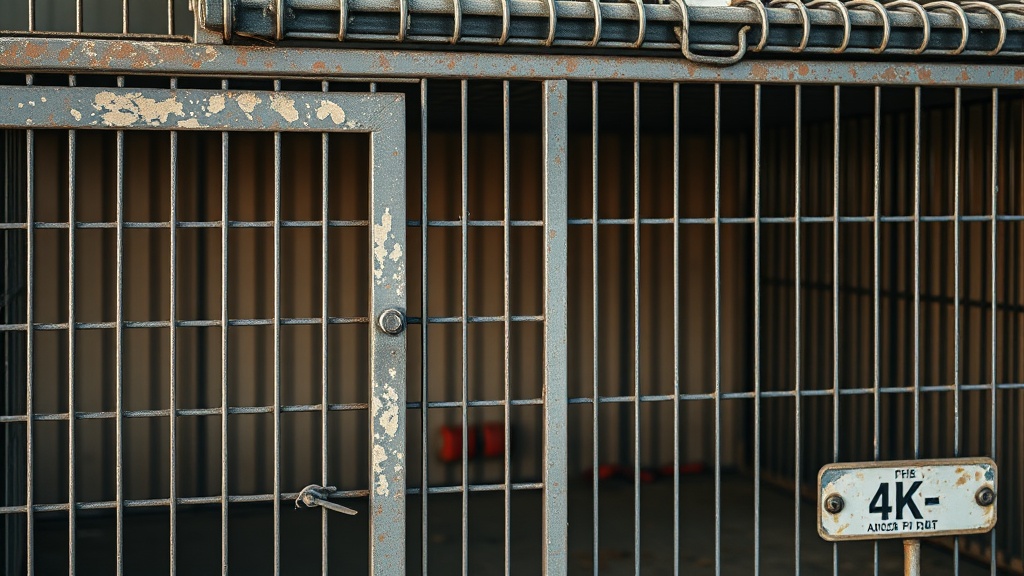
Comparing Crate Coating Safety: A Practical Breakdown
Understanding how different coating types perform helps you make an informed purchasing decision and evaluate crates you already own.
| Coating Type | Common Compounds | Toxicity Risk (Dogs) | Chipping Likelihood | Certification to Look For |
|---|---|---|---|---|
| Fully cured powder coat | Polyester or epoxy polymers | Low (when certified) | Low-Moderate | ASTM D3359 adhesion test |
| Liquid enamel paint | VOCs, potential heavy metals | Moderate-High | High | CPSC compliance claim |
| Zinc plating + topcoat | Zinc compounds | Moderate (zinc toxicity risk) | Moderate | RoHS compliance |
| Chrome plating | Hexavalent chromium possible | High if Cr(VI) present | Low (but flakes are toxic) | REACH regulation compliance |
| Bare stainless steel | None (coating-free) | Very Low | N/A | Grade 304 or 316 steel mark |
Under the hood, the safest crates on the market use either properly certified powder coating or food-grade stainless steel with no surface coating needed. Both options cost more — but the cost of a heavy metal toxicity workup at an emergency clinic is considerably higher.
Most guides won’t tell you this, but: the majority of crates marketed as “non-toxic” or “pet-safe” have received no third-party certification whatsoever. That label is applied by the manufacturer with zero regulatory requirement to substantiate it. I’ve seen this firsthand when clients bring in packaging for crates their dog has been chewing — there’s a “pet-safe” sticker on the box and a generic coating that’s never been independently tested.
What Happens Biologically When Dogs Ingest Paint Chips
The clinical picture from paint chip ingestion varies by compound — but the internal cascade it triggers in dogs can be serious even from what seems like small exposure amounts.
Species matters enormously here. Dogs process heavy metals differently than cats or humans. Canine gastrointestinal absorption of lead, for example, is affected by diet composition, gastric pH, and age. Young dogs and puppies absorb significantly higher proportions of ingested lead than adult dogs — the same dynamic seen in human children versus adults.
Zinc toxicity — which can come from galvanized or zinc-plated crate bars — causes a specific hemolytic anemia in dogs. Red blood cells are destroyed faster than they can be replaced. I’ve seen this present as sudden lethargy, pale gums, and jaundice. The Merck Veterinary Manual outlines zinc toxicosis in animals in detail — and the mechanism is well-established in clinical literature.
Lead toxicity in dogs tends to be more neurological. Seizures, ataxia, behavioral changes, and gastrointestinal cramping are the hallmarks. Chronic low-level exposure is particularly insidious because the signs develop gradually and are easy to attribute to other causes.
Cats are more sensitive than dogs to many of these compounds, but they are less likely to chew crate bars directly. If you house both species near shared enclosures, inhalation of paint dust from a dog’s chewing activity is a secondary exposure concern for cats.
Signs to watch for:
- Pale, white, or yellow-tinged gums
- Lethargy or sudden collapse
- Vomiting or diarrhea with dark-colored material
- Seizures or muscle tremors
- Excessive drooling or lip-licking after crate time
- Behavioral changes: confusion, aggression, or unusual vocalization
- Abdominal pain or hunched posture
When to see a vet instead: If your dog has ingested visible paint chips — especially if the crate is older, imported from an unregulated source, or shows multi-layer chipping — do not wait for symptoms. Call your veterinarian or an emergency clinic immediately. Bring a sample of the chip in a zip-lock bag if possible. A blood lead level test and a full CBC can identify heavy metal toxicity and hemolytic anemia before they become life-threatening.
How to Inspect, Remediate, and Replace Unsafe Crates
A systematic inspection protocol can help you determine whether your existing crate poses a real risk — and what your next steps should be.
Start with a visual sweep under good lighting. Run your finger along the weld points and bar intersections — these are the highest-stress areas where coating failure begins. Look for bubbling, flaking, or any areas where bare metal is exposed.
If you find significant chipping, the remediation question becomes: patch or replace? From a clinical perspective, I always recommend replacement when the chipping is multi-layered (meaning the primer coat is also compromised), when the crate is more than 3-4 years old with heavy use, or when the country of manufacture has limited coating safety regulations.
Patching with pet-safe epoxy or paint is a short-term measure at best. The key issue is that patches don’t bond as strongly to compromised underlying surfaces, and a determined chewer will remove them faster than the original coating.
For replacement, the Consumer Product Safety Commission provides guidance on lead in paint for consumer products that can help you understand what certifications to request from manufacturers before purchasing.
If you’re seeking expert-vetted alternatives and deeper guidance on enclosure safety, the resources at our expert pet wellness resource library include crate safety evaluations from a clinical standpoint.
For dogs that are compulsive chewers, consider whether the crate itself is the right tool. Heavy chewing of enclosure bars often signals anxiety, insufficient exercise, or an inappropriate confinement duration — and addressing those root causes protects your dog from paint toxicity better than any coating ever could.
Unpopular opinion: The dog crate industry needs mandatory third-party coating certification for products sold as pet enclosures — and until that exists, the burden of proof falls entirely on the pet owner to verify safety. We don’t accept unverified “non-toxic” claims on children’s products. There is no logical reason dogs should receive less protection.
FAQ
Can a single paint chip from a steel dog crate make my dog seriously ill?
Yes, in certain circumstances. A single chip from a coating containing lead or high concentrations of zinc can trigger toxicity, especially in small dogs or puppies. The dose-response relationship for heavy metals is not linear — individual sensitivity varies. Any confirmed ingestion of paint chips from a heavy-duty steel crate should prompt a veterinary call, not a wait-and-see approach.
How do I know if my crate’s paint contains lead or zinc?
Consumer-grade lead test swabs (available at hardware stores) can give a preliminary answer for lead. Zinc is harder to test at home. Your best option is to contact the manufacturer directly and request a Safety Data Sheet (SDS) for the coating used. If they cannot provide one, treat the crate as suspect. For definitive analysis, environmental testing labs can analyze a chip sample.
Are there truly non-toxic heavy duty crates available?
Yes — food-grade stainless steel crates with no additional coating are the gold standard for chemical safety. They are significantly more expensive ($300–$700 range) but eliminate coating toxicity risk entirely. Some manufacturers also offer independently certified powder-coated crates with ASTM adhesion testing documentation. Always request written certification rather than accepting a marketing label as proof.
References
- Agency for Toxic Substances and Disease Registry (ATSDR). Toxicological Profile for Lead. https://www.atsdr.cdc.gov/toxprofiles/tp13.pdf
- Merck Veterinary Manual. Zinc Toxicosis in Animals. https://www.merckvetmanual.com/toxicology/zinc-toxicosis/zinc-toxicosis-in-animals
- U.S. Consumer Product Safety Commission. Lead in Paint — Business Guidance. https://www.cpsc.gov/Business–Manufacturing/Business-Education/Business-Guidance/Lead-in-Paint
- ASTM International. Standard Test Methods for Measuring Adhesion by Tape Test (ASTM D3359). https://www.astm.org/d3359-17.html
- National Center for Biotechnology Information (NCBI). Heavy Metal Toxicity in Small Animals. https://www.ncbi.nlm.nih.gov/